
Manual Hoists
Choose a manual hoist based on how the operator applies force and the direction the load must move. Powerful Machinery supplies hand chain hoists for controlled vertical lifting and lever hoists for lifting, pulling, and positioning. Compare the two product families below, then send us the load, required lift, available headroom, suspension details, working environment and quantity. We will identify a suitable model and confirm the available documents for the quoted configuration.

We manufacture manual hoists in-house with strict QC and full load testing, giving you consistent quality and full production control.
Our manual hoists meet CE and ISO standards with complete test reports and material traceability for safe, compliant lifting.
We maintain stable production capacity and organized scheduling to ensure reliable supply and fast, predictable lead times.
We support OEM branding, custom specifications, and spare parts planning to help you grow your manual hoists business with confidence.
Choose the Right Manual Hoist for the Job
Manual hoists work without an electric motor, but different mechanisms suit different jobs. A hand chain hoist is normally suspended above the load and operated through a continuous hand chain. A lever hoist uses a ratchet handle and is often selected for shorter movements, pulling, and positioning. The exact permitted orientation and application depend on the selected model and its instructions.
| Selection point | Hand chain hoist or chain block | Lever hoist |
|---|---|---|
| Typical task | Controlled vertical lifting from an overhead support | Lifting, pulling, tensioning or positioning where the model permits |
| Operator input | Continuous hand chain | Ratchet lever handle |
| Operator position | Can provide hand-chain access below the suspension point | Operator works close enough to move the handle through its stroke |
| Space to check | Headroom, hand-chain drop and overhead support | Headroom, handle clearance and anchor position |
| Installation details | Fixed hook, beam clamp or compatible trolley arrangement | Rated anchor and hook connection suited to the intended pull |
For a detailed side-by-side review, use our chain block and lever hoist comparison. If the job is repetitive and powered lifting may be more suitable, read the manual and electric hoist comparison before choosing a product family. If you are comparing a manual chain hoist with a different lifting system, see our chain hoist and hydraulic lift comparison for differences in operation, lifting applications, capacity, and maintenance.
Browse Our Manual Hoist Range
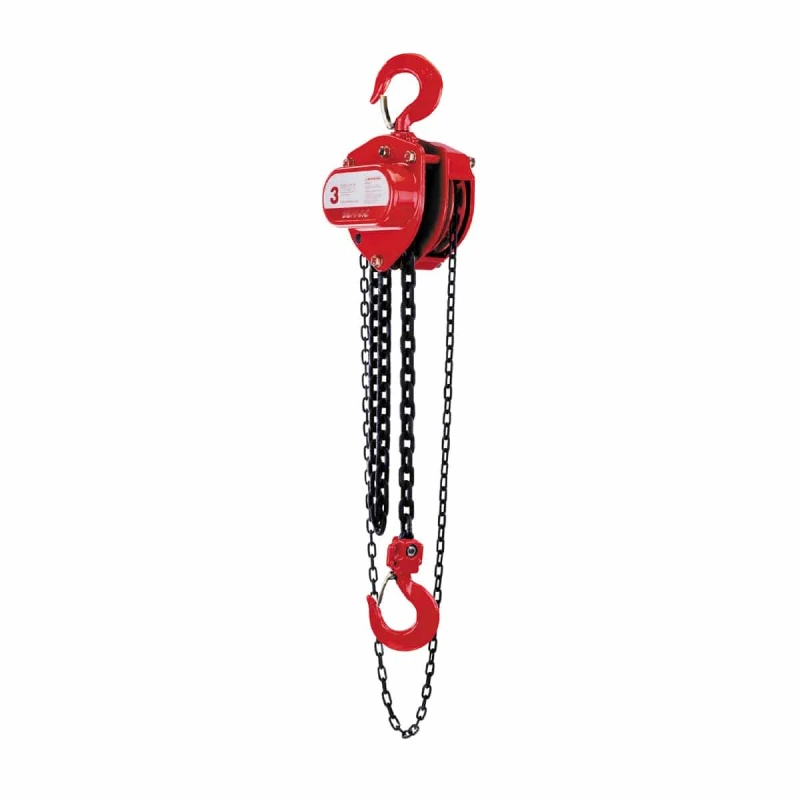
A hand chain hoist, often called a chain block, is intended for controlled lifting from a suitable overhead support. For a closer look at where this lifting method works well, review the practical advantages of hand chain hoists, including portability, power-free operation, and controlled load handling. Start with our chain block range to compare available series. Model-level examples include the SK Hand Chain Hoist, the HSZ-KII hand chain hoist, and the HSZ-T hand chain block. You can also review the HSZ-CB chain block specifications and compare rated capacity, standard lift, minimum hook distance, chain falls, hand-chain pull, load-chain size, and unit weight with your lifting requirements.

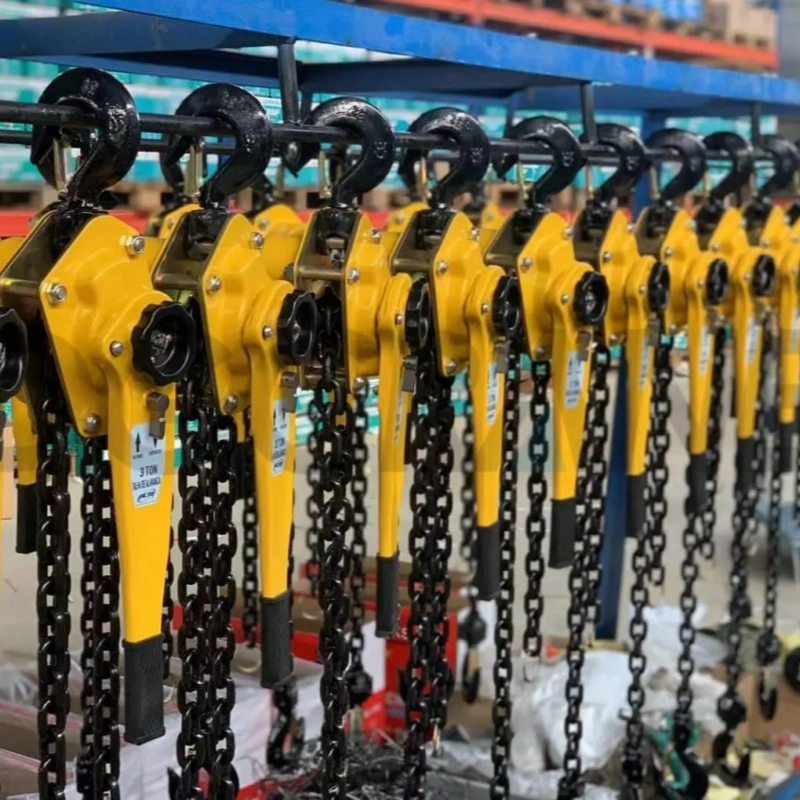
Lever hoists use a hand-operated ratchet mechanism for controlled movement. They are commonly considered when a job involves short lifts, load alignment, pulling or tensioning, but the proposed model must be approved for the actual direction of use. Browse the lever hoist range and review model pages such as the VA series chain lever hoist, the HSH-AL lever chain hoist, and the MINI lever hoist for compact, lower-capacity lifting and positioning applications. Compare rated capacity, standard lift, minimum headroom, handle effort, load-chain size, hook dimensions, and net weight for the selected variant.
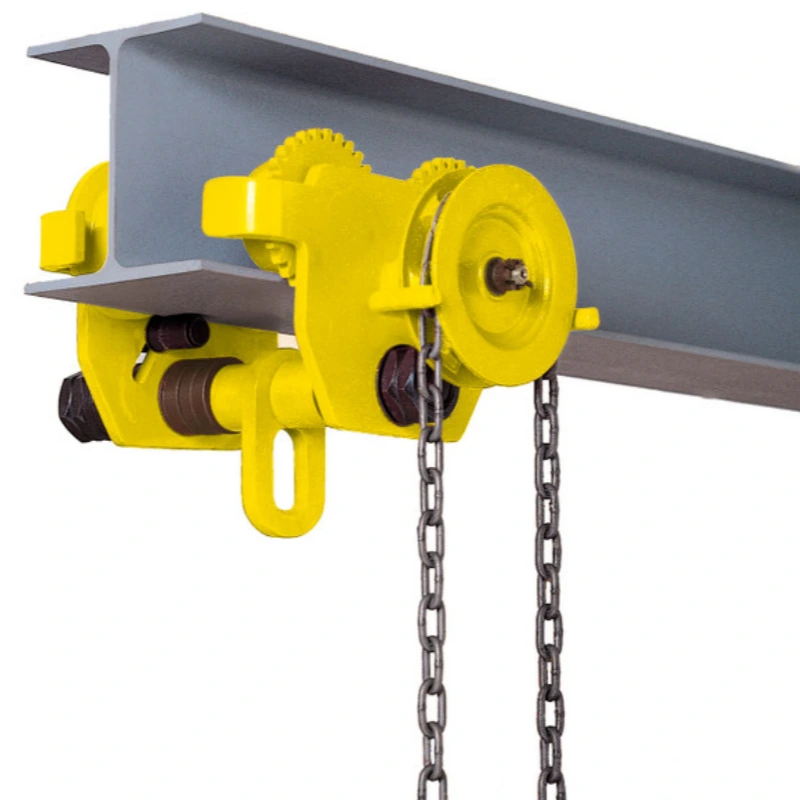
Manual Trolley Hoist
If the suspended load must travel along a beam, the hoist and trolley must be checked as one arrangement. Review the available manual trolley options and send the beam profile, flange width and thickness, required travel, suspension connection and available headroom. Do not select a trolley from capacity alone.
Manual Hoist Manufacturer Support for Industrial Orders
A useful quotation identifies the exact model and configuration instead of relying on a generic capacity label. For each enquiry, ask us to state the proposed model, rated capacity, standard or requested lift, minimum headroom, suspension, load-chain details, unit weight, and included documents. This makes it easier to compare quotations on the same scope.
For distributor and repeat orders, list quantities by capacity and lift. OEM branding, markings and custom packaging can be discussed for suitable batch orders. Minimum quantities, tooling, sample availability, and production lead time must be confirmed in the quotation. If spare parts are important to your maintenance plan, include the required parts list or ask what information is available for the selected series.


What to Send for an Accurate Quotation
A clear specification reduces the risk of receiving a model that fits the load rating but not the installation. Send the following information:
- The load to be lifted, including lifting attachments, and the requested rated capacity with units.
- Required hook travel or lift and the available minimum headroom.
- Whether the job is vertical lifting, pulling, tensioning or positioning.
- Top and bottom connection details, including hook or attachment dimensions.
- Fixed suspension or trolley travel. For a trolley, include the beam profile and flange dimensions.
- Operator position, hand-chain drop or lever-handle clearance.
- Frequency of use, usual load and working environment, including water, dust, chemicals or unusual temperatures.
- Quantity by model or capacity, delivery destination and required date.
- Required instructions, test records, declarations, markings, packaging, OEM branding and spare-parts information.
How We Review a Manual Hoist Request
Confirm the task and movement direction. We first separate overhead vertical lifting from pulling, positioning and tensioning work.
- Check the complete installation. Capacity is reviewed together with lift, headroom, suspension, connection sizes, operator access and beam details where applicable.
- Match the evidence to the model. Required instructions, test records, declarations, markings and traceability documents should be listed against the quoted configuration.
- Confirm the commercial scope. The quotation should state quantity, packaging, OEM requirements, spare-parts scope, delivery terms and any differences from your request.
Manual Hoist Documentation and Quality Questions
Documentation can vary by model, batch and destination market. State your requirements before the quotation is finalized. Ask which operating instructions, inspection records, test records, declarations, serial or batch identifiers and spare-parts information are available for the exact product offered. Do not treat a general company certificate as evidence that every hoist configuration meets the same product standard.
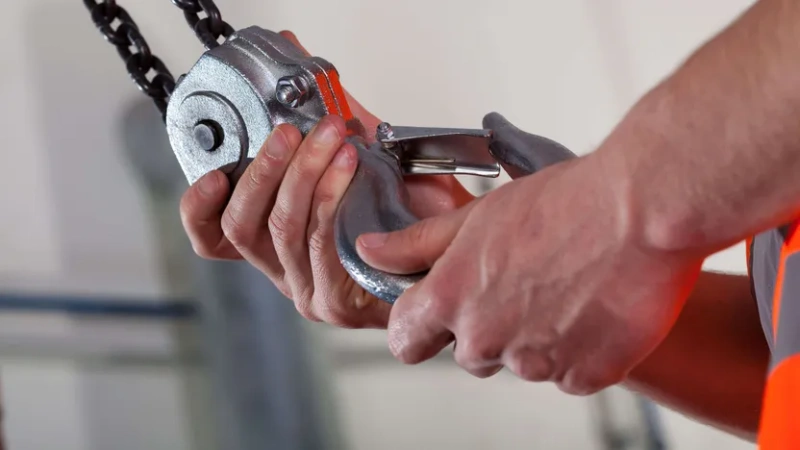
Before first use, follow the supplied instructions and your site procedure. For practical guidance on pre-use checks, load handling, and basic operating steps, see our manual hoist operating guide. A pre-use check does not replace periodic inspection by a competent person. Our manual hoist inspection guide outlines the questions to include in an inspection program. Remove a hoist from service when damage, abnormal operation or missing identification creates doubt, and have it assessed through an authorized process.
Manual Hoist Buying Guides
Use the commercial categories to choose a product. Use the supporting guides when you need a definition, comparison, or inspection topic in more detail.
- How a chain block works explains the hand-chain mechanism and the main components.
- Chain block storage and care covers cleaning, drying, chain organization, transport, and return-to-service checks.
- Lever hoist working principle explains the ratchet handle, gear train, and braking action.
- Chain hoist manufacturer evaluation covers evidence to compare when sourcing hand-chain or other chain hoist products.
- Lever hoist manufacturer guide focuses on supplier evaluation for lever-operated models.
Manual Hoist FAQs
What is a manual hoist?
A manual hoist is a hand-operated device used to lift, lower, pull, or position a load, depending on its design. Hand chain hoists use a continuous hand chain, while lever hoists use a ratchet handle. The rated capacity, permitted direction of use, and operating limits must be checked on the selected model.
How do I choose between a chain block and a lever hoist?
Choose a chain block for controlled vertical lifting from a suitable overhead support. Consider a lever hoist when the task involves short movement, pulling or positioning and the model is approved for that direction. In both cases, confirm capacity, lift, headroom, connection sizes, operator access and environment.
Can a manual hoist be used for horizontal pulling?
Do not assume that every manual hoist can pull horizontally. A standard hand chain hoist is generally selected for vertical lifting. Some lever hoists are designed for pulling or positioning, but the exact model and instructions must permit the intended direction and anchoring arrangement.
What information do you need to quote a manual hoist?
Send the total load, requested capacity, lift, available headroom, movement direction, suspension or anchor details, connection sizes, operator position, environment, frequency of use, quantity, destination and required documents.
Which documents should I request?
List the documents required by your purchasing, inspection, and destination-market teams. Ask the quotation to identify the exact model and state which instructions, test records, declarations, markings, serial or batch identifiers, and spare-parts information are included.
Can I order OEM branding or custom packaging?
OEM branding, markings and packaging can be discussed for suitable batch orders. Provide artwork, label content, packing method, quantities and destination. Minimum quantities, sample approval, tooling and lead time must be confirmed before order.
How should I compare manual hoist manufacturers?
Compare the exact models rather than company claims alone. Check rated capacity, lift, headroom, operating effort, dimensions, unit weight, test and inspection evidence, instructions, spare-parts support, packaging, lead time and the supplier’s handling of any differences from your specification.
Request a Manual Hoist Quote
Send your lifting task and installation details, even if you have not selected a model. Include a drawing or clear photos when headroom, beam fit, or connection sizes may affect the choice. We will review the request and identify the information that still needs confirmation before quotation.