
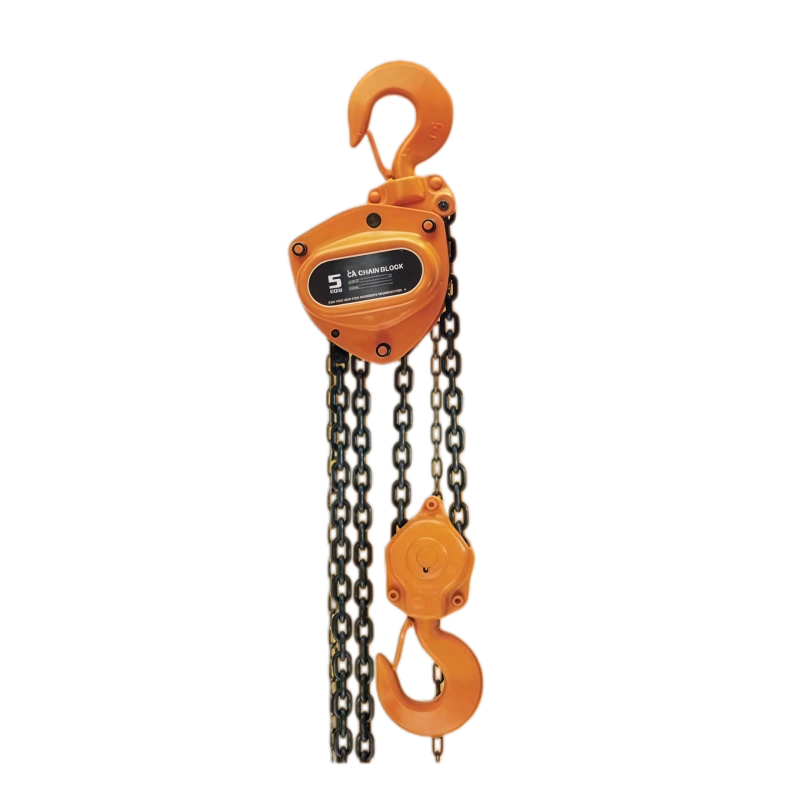
HEAVY DUTY CHAIN BLOCK DRAWING
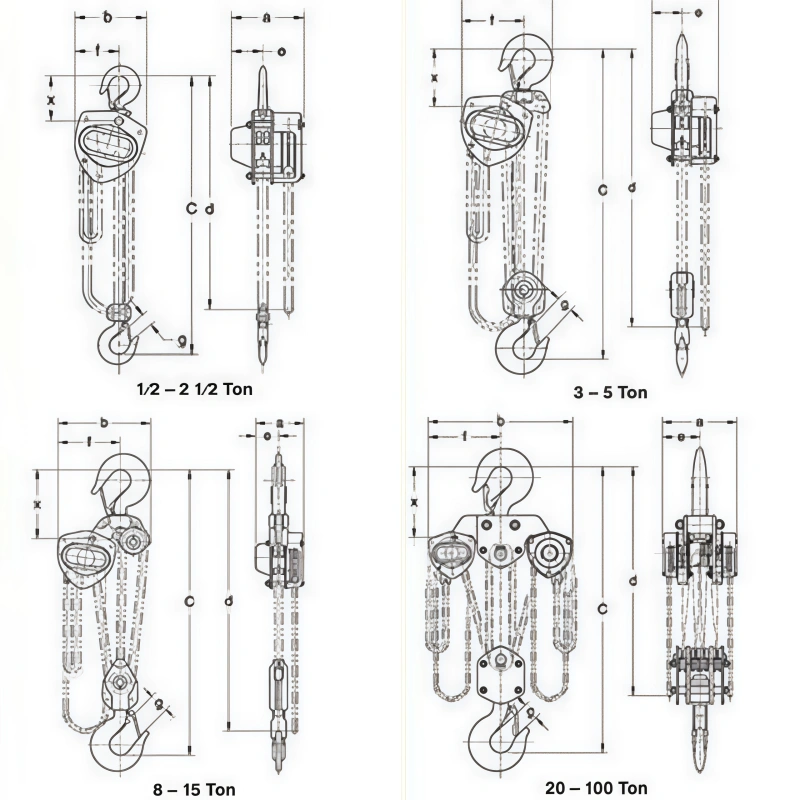
SPECIFICATIONS
This series is one option within our chain block range. Use the specifications below to compare HSZ-CB configurations by rated capacity with your installation requirements, then provide the required capacity, lift, and quantity when requesting a quotation. The test load shown in the table is not an allowable working load and must not be used to select the hoist capacity; never exceed the rated capacity marked on the hoist.
| Model | CB1/2 | CB1 | CB1/2 | CB2 | CB3 | CB5 | CB10 |
| Capacity(t) | 0.5 | 1 | 1.5 | 2 | 3 | 5 | 10 |
| Standard lift(m) | 2.5 | 2.5 | 2.5 | 3 | 3 | 3 | 3.5 |
| Test load(t) | 0.75 | 1.5 | 2.25 | 3 | 4.5 | 6.25 | 12.5 |
| Min.distance between hooks(mm) | 240 | 270 | 347 | 380 | 470 | 600 | 700 |
| Chainpull to lift full load (n) | 221 | 304 | 343 | 314 | 343 | 381 | 392 |
| No. of load chain fall lines | 1 | 1 | 1 | 1 | 2 | 2 | 4 |
| Diameter of load chain(mm) | 6 | 6 | 7.1 | 8 | 7.1 | 10 | 10 |
| Net weight(kg) | 8.4 | 11 | 13.5 | 21 | 22 | 40 | 77 |
| Gross Weight(kg) | 9.4 | 12 | 14.5 | 22 | 23 | 41.5 | 85 |
| Packing measurement L×W×H(cm) | 28×21×17 | 30×24×18 | 34×29×20 | 33×28×19 | 38×33×20 | 45×39×24 | 55×51×29 |
SELECTING AN HSZ-CB CONFIGURATION
Rated Capacity and Total Load
Determine the maximum total load before selecting a hoist. Include any lifting attachments or below-the-hook devices carried by the hoist. The suspension structure, trolley, and connectors must also be suitable for the intended load and installation.
Lift and Available Headroom
The standard lift is 2.5 metres for the 0.5, 1, and 1.5 tonne configurations; 3 metres for the 2, 3, and 5 tonne configurations; and 3.5 metres for the 10 tonne configuration. Check the minimum hook distance against the available headroom. Standard lift and minimum hook distance are different installation parameters and should not be treated as interchangeable.
Suspension and Beam Travel
Identify the overhead support and confirm that the suspension hook is correctly seated without tip loading or interference. If the load must travel along a beam, review our manual trolley options and provide the beam profile, flange width, and required travel. Confirm trolley compatibility for the complete hoist-and-trolley assembly.
Hand-Chain Access
Provide enough clearance for the operator to pull the hand chain smoothly from a stable position. The hand chain operates the hoist mechanism; the load chain supports the load. These chains perform different functions and are not interchangeable. Any replacement chain must match the manufacturer-approved specification for this hoist.
APPLICATIONS AND OPERATING LIMITS
Manual operation can suit intermittent equipment installation, workshop handling, and maintenance lifting where a power supply is unavailable or unnecessary. “Heavy-duty” is a product description, not a separate working-load rating or proof of suitability for continuous-duty, explosive, or corrosive service.
- Use the hoist only for vertical lifting in accordance with the approved instructions.
- Do not side-pull, subject the hoist to shock loading, or exceed its rated capacity.
- Do not lift or support people.
- Keep the load properly seated in the hook bowl, not on the hook tip or latch.
- Keep personnel clear of suspended loads.
- Stop operation if the chain binds, the load brake does not hold the load, or any abnormal condition occurs.
Describe any moisture, temperature, dust, or chemical exposure when requesting a quotation. Do not assume that a standard configuration is suitable for marine, hazardous, or extreme-temperature service. Special operating conditions require written confirmation before purchase.
INSPECTION AND CARE
Before use, inspect the identification markings, suspension components, hooks, latches, chains, and housing for visible damage or abnormal conditions. Follow the approved manual for functional checks and operation. Our guide on how to use a chain block provides additional operating context.
Use the chain block inspection checklist for detailed inspection points and records. Remove damaged or malfunctioning equipment from service for assessment by a competent person. Follow the approved chain block maintenance procedure and avoid contaminating brake friction surfaces with lubricant. Keep the unloaded hoist clean and dry during chain block storage and care.
INFORMATION TO INCLUDE IN YOUR RFQ
- Rated capacity and required lift.
- Quantity and delivery destination.
- Available headroom and clearance limits.
- Fixed suspension or beam-trolley arrangement.
- Beam profile and flange width if a trolley is required.
- Operating environment and expected frequency of use.
- Required inspection records, product documentation, and manuals.
- Required markings, packaging, and delivery terms.
For supplier evaluation and documentation criteria, see our guide to evaluating chain hoist manufacturers.
FAQ
What Capacities Does the HSZ-CB Range Cover?
The standard range covers rated capacities of 0.5, 1, 1.5, 2, 3, 5, and 10 tonnes. Select the capacity based on the maximum total load, not the test-load value.
Does the HSZ-CB Require Electricity?
No. The hoist is operated manually by pulling the hand chain. An appropriately rated overhead support is still required.
Can I Request a Different Lift?
State the required lift (hook travel) in your inquiry. Availability, load-chain length, hand-chain length, weight, and packaging must be confirmed for the requested configuration.
Can a Heavy-Duty Chain Block Be Used for Side Pulling?
No. The load line must remain aligned for vertical lifting in accordance with the approved product instructions. The “heavy-duty” description does not permit side pulling.
Which Documents Should I Request?
Specify the technical datasheet, operating manual, inspection and/or test records, and any market-specific compliance documents required for your order. Confirm document availability and scope before purchase.