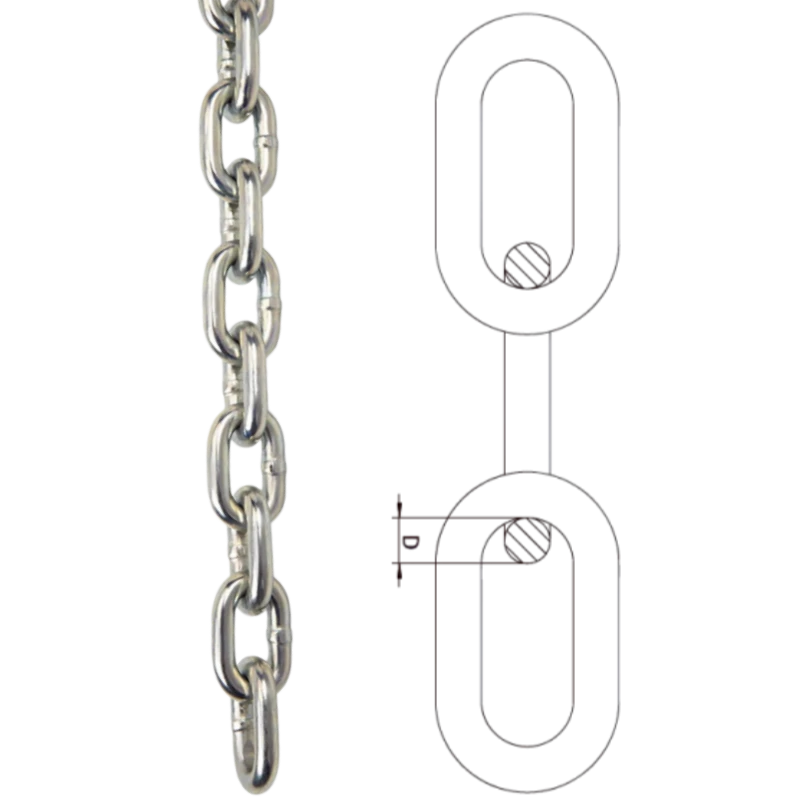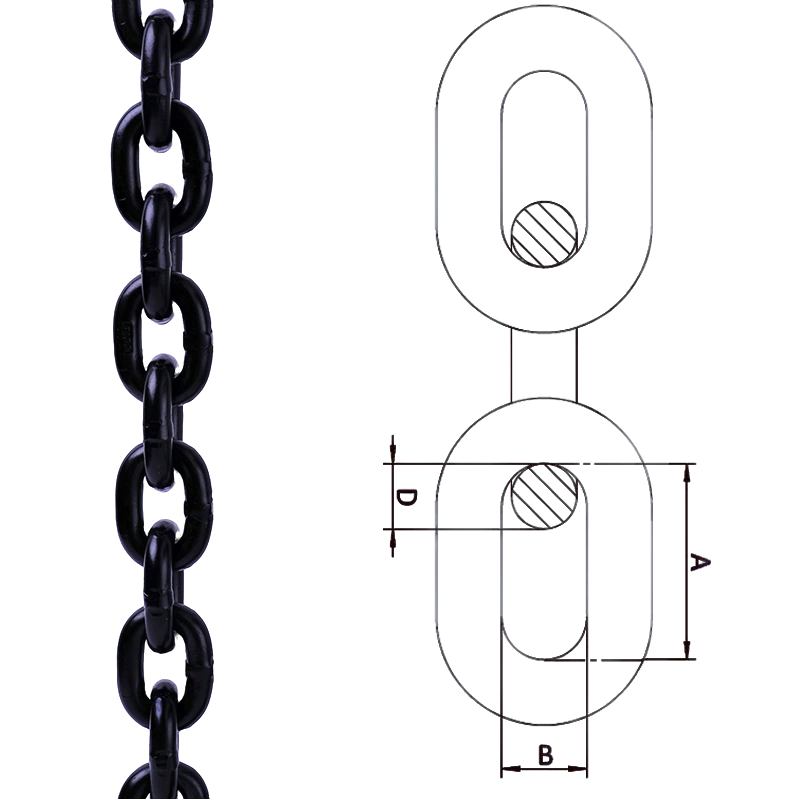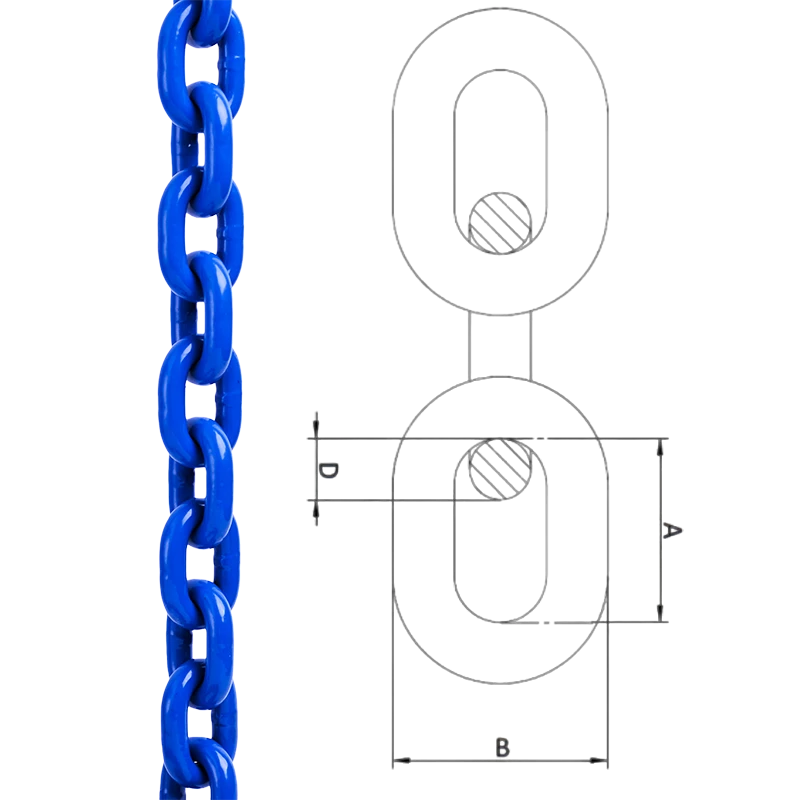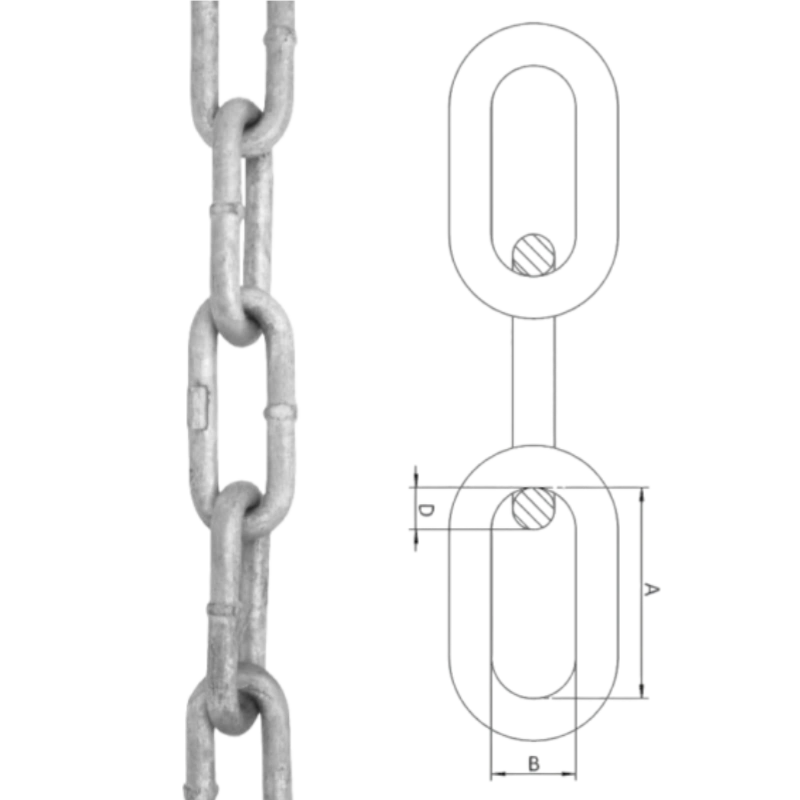
DIAGRAMS
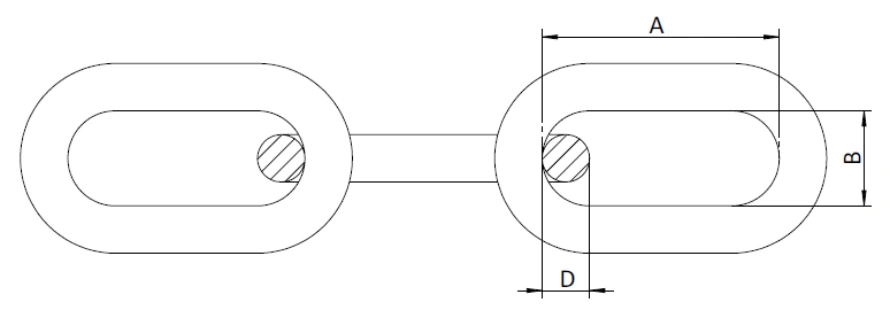
PRODUCT SPECIFICATIONS
| SIZE | A | B | MBL | Weight |
| mm | mm | lbs | kg/foot | |
| 1/2″ | 79.36 | 25.4 | 39000 | 1.07 |
| 5/8″ | 90 | 24 | 58000 | 1.38 |
| 3/4″ | 102 | 31.75 | 62000 | 1.77 |
| 1″ | 127 | 51 | 85000 | 3.6 |
DESIGN of DOCK FENDER CHAIN
MATERIAL
- Galvanized Steel/Carbon Steel/Alloy Steel
Design Factor
- 4 to 1
FINISH
- Galvanized Finish
FEATURES
- The long link design enables shackle attachment.
APPLICATION
- Used for dock fendering or cargo lashing
PACKAGING
- Custom packaging available
INSTRUCTIONS & CAUTIONS of DOCK FENDER CHAIN
WORKING LOAD LIMITS: This is the maximum load (in pounds) a chain should ever handle, even when it’s new and the load is evenly distributed along a straight, untwisted length. The “working load limit” doesn’t reflect the load the chain could potentially endure if conditions like wear, twisting, misuse, overloading, or corrosion are introduced. These factors can reduce the chain’s strength, so regular inspections are crucial to ensure safety.
PROOF TEST: This is the load (in pounds) a chain undergoes before leaving the factory. The chain is tested under direct tension in a straight line at a consistent speed using a standard testing machine. The purpose of this test is to identify any material or manufacturing defects.
All dock fender chains are proof tested. When using attachments like hooks or rings, make sure they match the chain’s grade, type, and size for proper load-bearing performance.
GENERAL WARNING: Do Not Use for Overhead Lifting. DO NOT EXCEED THE WORKING LOAD LIMIT
OUR ADVANTAGES
Customizable Strength & Size
Powerful Machinery customizes dock fender chains to meet your exact needs, whether you’re looking for a specific load capacity or chain length. Just like lifting chains, we adjust every detail to ensure your chain can withstand harsh marine environments and the weight of large vessels. We make sure each chain is built for reliability and to meet your project’s requirements.
Built to Resist Corrosion
Our dock fender chains use high-quality galvanized or stainless steel, ensuring long-lasting durability in saltwater and extreme weather. Just like our rigging chains, these chains stand up to corrosion, giving you a reliable solution that lasts year after year without rusting or weakening. Protect your dock and ships with chains designed to endure harsh marine conditions.
Easy Custom Attachments
Dock fender chains need to fit perfectly with your setup. We offer easy-to-integrate customizations, including link sizes and attachments that suit your specific dock or fender system. Whether you’re replacing old chains or setting up a new docking system, we ensure your chains work seamlessly with your equipment, just like we do with our rigging and lifting chains for heavy-duty projects.
On-Time, Reliable Delivery
We know that timing is critical in marine projects. Powerful Machinery guarantees on-time delivery, just like our lifting chains, ensuring your dock fender chains arrive when you need them. With our streamlined production process and efficient logistics, you won’t face delays, helping you keep your projects on track and your operations running smoothly.
FAQ of DOCK FENDER CHAIN
What Are Dock Fender Chains and Why Are They Important for Docking Systems?
Dock fender chains are heavy-duty chains used to secure dock fenders in place, protecting both the dock structure and vessels from damage. These chains are vital for ensuring the stability and effectiveness of docking systems, preventing shifting or movement of fenders when ships come in contact.
-
Heavy-Duty Material: Dock fender chains are made from galvanized steel or stainless steel, ensuring they are resistant to rust and corrosion in marine environments.
-
Load Distribution: They evenly distribute the force of vessels against the fender, reducing wear and tear on both the dock and the ship.
-
Adjustability: These chains allow you to adjust fender positioning for different vessel sizes and docking configurations.
How Do You Choose the Right Dock Fender Chain for Your Facility?
Choosing the right dock fender chain requires understanding the dock environment, the size of vessels, and the intended use. Several factors should influence your decision:
-
Material Type: Choose galvanized or stainless steel chains for corrosion resistance. Galvanized steel is ideal for standard dock applications, while stainless steel is better for harsh marine environments.
-
Chain Size and Strength: Ensure the chain has the appropriate diameter and load capacity to support the weight and force of vessels.
-
Link Design: The design of the chain links can affect the flexibility and durability. Opt for high-strength welded links for greater reliability.
How Do Dock Fender Chains Protect Vessels From Damage?
Dock fender chains help protect vessels by absorbing the impact and shock when ships make contact with the dock. This is crucial in preventing scratches, dents, or more significant damage to the vessel’s hull.
-
Shock Absorption: The chain holds the fender firmly in place, allowing the fender to absorb the impact without letting the ship come in contact with the dock structure.
-
Prevents Movement: Chains secure the fenders at a fixed position, ensuring that they cannot move or shift during docking, maintaining continuous protection.
-
Prevents Wear on Fenders: With the chain securing the fender, it reduces the friction and wear caused by constant ship contact, extending the lifetime of the fender.
What Materials Are Best for Dock Fender Chains?
The best materials for dock fender chains are galvanized steel and stainless steel, each with unique advantages depending on your environment.
-
Galvanized Steel: This material is cost-effective and provides a strong resistance to corrosion. It is ideal for standard marine environments.
-
Stainless Steel: More expensive but offers superior corrosion resistance and is perfect for harsher environments, such as saltwater docks.
-
Other Options: Some chains are coated in polymer or rubber for additional protection, especially in areas where extra cushioning is needed.
How Do You Install Dock Fender Chains Correctly?
Installing dock fender chains correctly ensures maximum protection and safety. Here’s how to do it:
-
Positioning the Fender: Place the fender in the desired position along the dock edge. Ensure it aligns with the dock to absorb impact effectively.
-
Attaching the Chain: Attach one end of the fender chain to the fender, making sure the chain is tight and the fender remains in position.
-
Securing the Chain to the Dock: Use strong eye bolts or anchor points on the dock to secure the other end of the chain. Ensure that the connection is tight but still allows for slight adjustment.
-
Adjusting the Tension: After installation, check the chain for proper tension. It should be tight enough to keep the fender in place but not so tight that it causes strain or wear.
Correct installation ensures the fender chain remains effective in protecting both the vessel and the dock during every docking operation.
Can Dock Fender Chains Be Adjusted for Different Vessel Sizes?
Yes, dock fender chains can be adjusted for different vessel sizes, ensuring that the fender remains in the optimal position. This adjustability is important as vessels of various sizes may require different fender placements.
-
Adjustable Links: Some dock fender chains come with adjustable links, allowing for easy resizing to accommodate different boat or ship lengths.
-
Multiple Anchor Points: Using multiple anchor points along the dock enables you to move the fender and chain positioning quickly to match different vessels.
-
Custom Length Chains: Custom lengths of chains are available if your dock regularly receives varying vessel sizes. These can be easily swapped out or adjusted depending on the needs of the ship.
What Are the Maintenance Requirements for Dock Fender Chains?
To keep dock fender chains in optimal working condition, regular maintenance is essential:
-
Routine Inspections: Check for signs of rust, corrosion, or wear. Replace any parts that are damaged to maintain effective protection.
-
Lubrication: Periodically lubricate the chain links to reduce friction and ensure smooth operation. Use marine-grade grease for best results.
-
Cleaning: Remove any debris or marine buildup from the chain after use to prevent it from wearing down the metal. A soft brush and freshwater rinse work well.
-
Check Tension: Over time, the chain may lose tension. Check and adjust it regularly to ensure the fender stays in place.
Regular maintenance helps extend the lifespan of your dock fender chains and prevents costly replacements.
How Do Dock Fender Chains Handle Harsh Weather Conditions?
Dock fender chains are designed to withstand harsh weather conditions, including high winds, saltwater exposure, and extreme temperatures.
-
Corrosion Resistance: Choose stainless steel or galvanized chains to ensure they resist rust and corrosion from saltwater and humidity.
-
High-Strength Materials: These chains are made from high-strength alloys that can handle strong winds and heavy forces without breaking.
-
Temperature Resilience: Dock fender chains can endure extreme cold and heat, ensuring they remain functional in all weather conditions.
Are Custom Dock Fender Chains Available for Specific Applications?
Yes, custom dock fender chains are available to meet the specific needs of your docking operations. These custom chains are designed for unique dock sizes, environments, and vessel types.
-
Custom Chain Lengths: You can request chains tailored to fit your dock’s specific layout and load-bearing needs.
-
Unique Fittings: Custom anchors or end connectors ensure the chain works seamlessly with your fender system.
-
Specialized Coatings: For docks in high-salinity areas, specialized coatings can be applied to prevent corrosion and ensure maximum durability.
What Are the Cost Factors for Dock Fender Chains?
The cost of dock fender chains varies based on several factors:
-
Material Type: Stainless steel and galvanized steel will affect the price. Stainless steel is generally more expensive but offers superior corrosion resistance.
-
Chain Length: Longer chains or custom lengths typically cost more.
-
Fender System Size: Larger dock systems require stronger, more durable chains, which increase the price.
-
Accessories: Additional components such as safety latches, swivels, and adjustable links may increase the overall cost.
While the initial investment may vary, high-quality dock fender chains offer long-term value by reducing the risk of damage and extending the lifespan of your dock and fender system.