
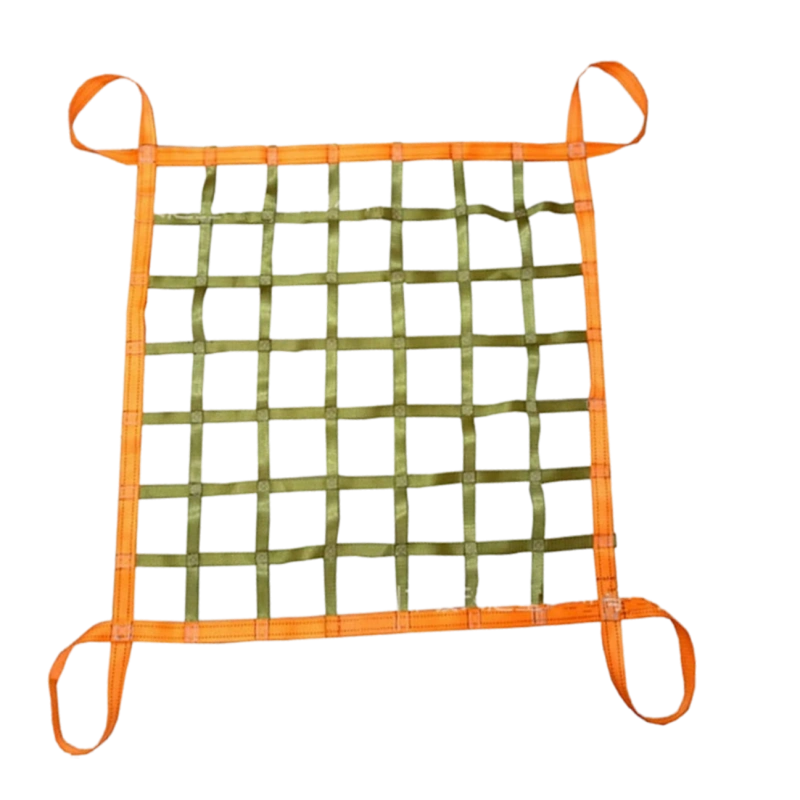
DIAGRAM OF CARGO NET FOR LIFTING

Pocket Pitch is 200mm, Centre to Centre.
Standard eye length is 1 metre c/w reinforcement at lifting point.
CARGO LIFTING NET SPECIFICATIONS
Use the approved product table below to compare models. Each row should identify the model, rated capacity, overall size, material, webbing or rope dimensions, mesh opening, pocket pitch, lifting eyes or end fittings, safety factor, test information, and net weight. These fields should match the engineering specification, product label, and documents supplied with the order.
| Code | S.W.L kg | Size |
| CL5500202 | 5000 | 2 mtrs x 2 mtrs |
| CL5500303 | 5000 | 3 mtrs x 3 mtrs |
| CL5500404 | 5000 | 4 mtrs x 4 mtrs |
| CL5500505 | 5000 | 5 mtrs x 5 mtrs |
| CL5500606 | 5000 | 6 mtrs x 6 mtrs |
CARGO LIFTING NETS FEATURES
Flexibility and Lightweight
Cargo nets are significantly more flexible, lightweight, and compact compared to wire or manila rope nets, making them easier to handle and store.
Proper Functionality
Cargo nets must be square in shape to function correctly. Rectangular nets may not properly encapsulate the load or distribute weight over the net’s strength members, reducing their effectiveness.
Durability and Safety Criteria
Cargo nets must meet safety standards, including:
-
Manufacturer’s code and load rating
-
Identification and material markings
-
Avoidance of acid burns, tears, and charring
-
No excessive abrasive wear or damaged fittings
-
Adherence to ASME B30.10 and B30.26 standards for hardware integrity
Load-Bearing Capacity
Made from strong synthetic fibers, these nets are designed to bear heavy loads, making them suitable for various industries such as construction, agriculture, warehousing, and transportation.
HOW TO CHOOSE THE RIGHT CARGO LIFTING NET
Begin with the maximum gross load and include anything the net will support during the lift. Provide the load’s length, width, height, shape, rigidity, center of gravity, and any loose parts that need containment. The net must support the load without allowing it to pass through the openings or shift into an unstable position. For irregular loads, send a drawing or marked-up photo showing the intended lifting points and orientation.
Next, define the interface with the lifting device. State the number and position of lifting points, the required eye or end connection, and the hook or shackle dimensions. Identify sharp edges, corners, abrasion, heat, chemicals, moisture, UV exposure, or other conditions that could affect the net or require protection. Final selection remains subject to technical review of the complete application and the approved instructions for the chosen model.
| RFQ Input | What to Provide |
|---|---|
| Maximum load | Gross load + units |
| Load geometry | L×W×H, shape, rigidity, center of gravity |
| Net geometry | Overall size, usable area, mesh opening/pitch |
| Lifting interface | Eyes/end fittings, lifting points, hook/shackle dimensions |
| Environment | Edges, abrasion, temperature, chemicals, moisture, UV |
| Commercial | Quantity, destination, required standard/docs, delivery |
MANUFACTURING, LOAD TESTING & MARKING
Manufacturing and quality information should be specific to the quoted net. Ask for confirmation of the actual material and construction, how load-bearing intersections and lifting eyes are formed, which dimensions are inspected, and how the finished item is identified. Supporting evidence may include material records, in-process inspection, final dimensional checks, a label example, and photographs of the assembly and packing stages, depending on the order.
If proof or load-test documentation is required, ask the quotation to state whether the test applies to every item, a sample, or a defined batch, together with the test basis and document supplied. The product label and documents should use the same model, rated-capacity terminology, material description, manufacturer identity, and batch or serial reference. Product-specific evidence is more useful than a broad ASME, CE, or ISO statement that may not cover the net being ordered.
CUSTOM CARGO LIFTING NETS
Custom requirements may include overall dimensions, usable load area, mesh opening or pocket pitch, webbing or rope construction, lifting-eye length, end connections, identification, packaging, and document packs. Send the load drawing, target configuration, quantity, destination, and required delivery date. The quotation should list approved dimensions, rating, materials, assumptions, exclusions, testing, marking, and any deviation from the request.
APPLICATIONS
Cargo lifting nets may be considered for handling suitable packaged, bundled, or irregular loads in industrial, warehouse, construction, logistics, or agricultural operations when the approved model and lift plan support the task. Application labels are not a substitute for selection. The load, lifting points, connection method, edges, environment, and intended lifting arrangement must be reviewed before use.
INSPECTION & SAFE USE
Inspect the net, load-bearing members, intersections, lifting eyes, end connections, and identification before use. Remove the net from service if the inspection criteria in the product instructions are not met. Protect the net from incompatible edges, abrasion, chemicals, heat, and other conditions identified by the manufacturer. Keep the load controlled and follow the approved lift plan, site procedure, and product instructions. For a longer overview, read how to use a cargo net.
OUR ADVANTAGES
Custom Solutions for Your Business
We offer customized trawl blocks that meet the specific demands of your operations. Whether you need a particular size, load rating, or special feature, we tailor the blocks to suit your exact requirements. No matter your operation, we provide the perfect fit for your marine and offshore needs.
Expert Knowledge and Industry Insights
With years of experience in the lifting equipment industry, we offer expert advice to help you choose the right products for your business. From safety recommendations to efficient lifting techniques, we guide you on how to optimize your equipment and improve safety standards. Trust us for valuable insights that enhance your operations.
Quick and Reliable Delivery
We know how important timing is in your business. Powerful Machinery ensures fast and reliable delivery, so you can get your products when you need them. No matter the size of the order, our efficient supply chain helps minimize downtime, keeping your operations on track and helping you meet tight deadlines.
Dedicated Customer Support
Our customer support team is always ready to assist you. Whether you have questions about product specifications, need guidance on usage, or require after-sales support, we provide timely and expert assistance. We're here to make sure you get the best experience from start to finish, helping you make informed decisions every step of the way.
Cargo Lifting Net FAQ
What Information Do I Need for a Cargo Lifting Net Quote?
Provide the maximum load and units, load dimensions and shape, required net dimensions, mesh opening or pocket pitch, lifting points, eye or end connection, hook or shackle dimensions, environment, quantity, destination, and required marking or documents. Attach a drawing or photo for irregular loads.
How Do I Choose the Correct Net Size and Rated Capacity?
Size the request around the complete load and lifting arrangement, not the load weight alone. The net must support and contain the load while connecting correctly to the lifting device. Final size and rated capacity should be confirmed from the approved model data after the load geometry, lifting points, and working conditions have been reviewed.
Can the Mesh, Pocket Pitch, Lifting Eyes, or End Connections Be Customized?
Available changes depend on the construction and the technical review. Mark the required dimensions and connection details on a drawing, then request written confirmation of the approved configuration, rating, materials, testing, marking, minimum quantity, and lead time.
What Markings and Test Documents Are Supplied?
Marking and document availability depend on the product and order. State the required model identification, rated capacity terminology, material, batch or serial reference, manufacturer information, inspection record, certificate, proof or load test document, and third-party requirement in the RFQ.
How Should I Inspect a Lifting Net Before Use?
Follow the inspection criteria supplied with the product and your site procedure. Check the load-bearing material, mesh intersections, stitching or connections, lifting eyes, fittings, label, contamination, heat damage, abrasion, cuts, deformation, and any sign that could affect use. A competent person should decide whether the net remains in service.
Can Cargo Lifting Nets Be Used With Sharp-Edged Loads?
Sharp edges can damage load-bearing material. Do not assume a net is suitable without reviewing the edge condition, required protection, load movement, and product instructions. Share photographs or drawings with the supplier and obtain technical confirmation before the lift.
What is Cargo Lifting Net Used For?
Common Applications:
Industrial: Lifting machinery, equipment, and materials.
Agricultural: Lifting agricultural products, animal feed, and fertilizers.
Warehousing: Handling goods within factories and warehouses.
Transportation: Loading/unloading goods from trucks, containers, and ships.
Construction: Lifting construction materials like bricks and tiles.
What is a cargo lifting net and how does it work?
Cargo lifting nets are used to secure goods during lifting and transport. Made from durable synthetic fibers, these nets prevent cargo from shifting, reducing the risk of damage or accidents. They distribute weight evenly across the load, providing stability. Whether in construction or transportation, they make lifting large and irregularly shaped items much safer and easier.
Can I use a cargo lifting net in extreme weather conditions?
Yes, cargo lifting nets made from high-quality synthetic materials like polyester are designed to withstand harsh weather conditions. They offer excellent resistance to UV rays, moisture, and temperature fluctuations. However, always inspect the net for any signs of damage due to prolonged exposure to extreme weather, and ensure proper storage to maintain its durability.
How do I maintain and clean a cargo lifting net?
-
Regular Inspection
Regularly inspect the cargo lifting net for any visible damage such as frays, cuts, or wear. This ensures the net remains safe for use. -
Cleaning
Clean the net using water and mild soap. Avoid harsh chemicals, as they can weaken the synthetic fibers and compromise the net’s strength. -
Drying
After cleaning, let the net dry completely before storing it. Ensure it’s fully dry to prevent mildew or deterioration from moisture. -
Pre-Use Check
Always check the net’s condition after cleaning and before each use to confirm it’s in good working order and safe for operation.
How can I get a customized cargo lifting net for my business?
-
If you need a cargo lifting net tailored to specific requirements, we offer customization options. You can specify dimensions, load capacity, mesh size, and materials based on your lifting needs. Contact our team to discuss your unique requirements, and we’ll work with you to create a cargo net that fits your operational needs perfectly.