
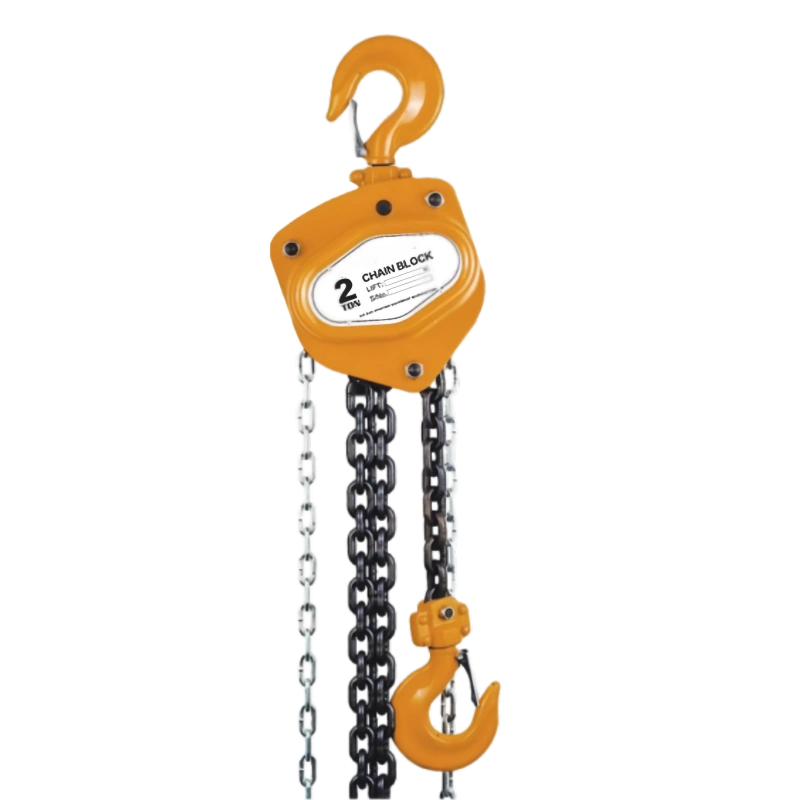
HSZ-A TYPE CHAIN BLOCK OVERVIEW
Pulling the hand chain operates the hoist mechanism and moves the load chain to raise or lower the load. The load brake holds the load when the operator stops pulling the hand chain.
Model selection must consider the complete lifting arrangement. Rated capacity alone does not confirm that the hoist will fit the available space, provide sufficient lift, or suit the suspension point and service conditions.
HSZ TYPE CHAIN BLOCK DRAWING
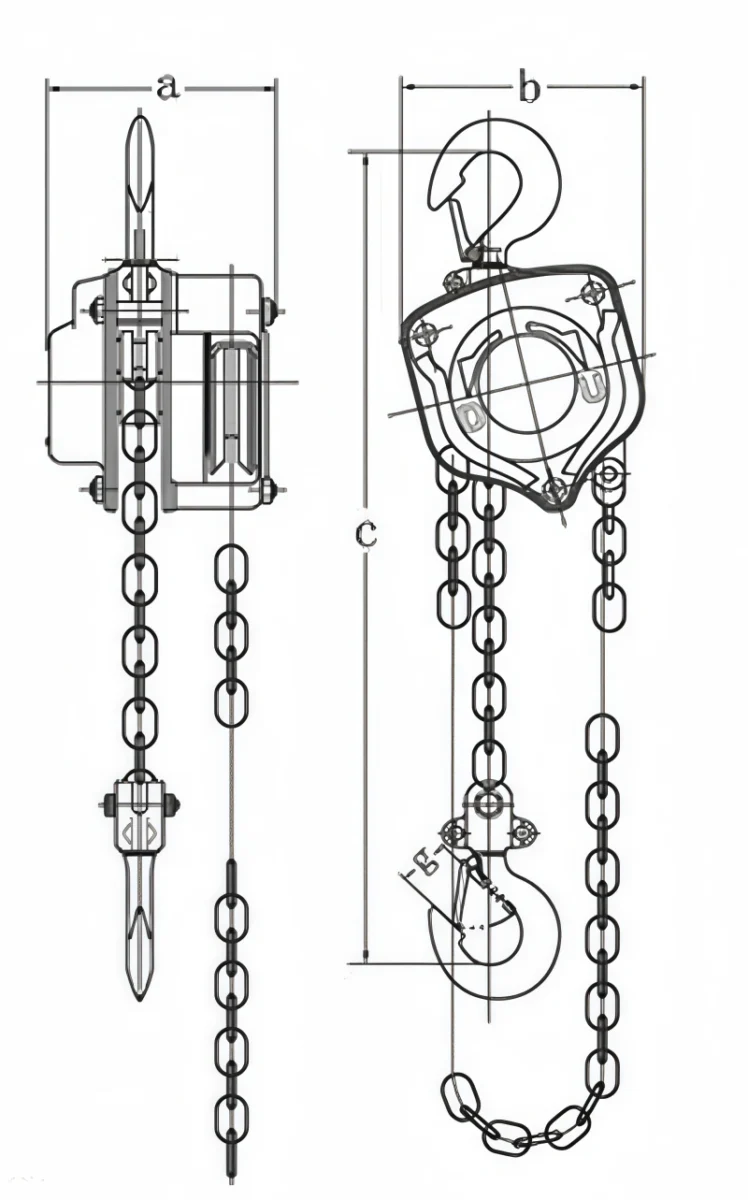
HSZ CHAIN BLOCK SPECIFICATIONS
Use the HSZ-A specification table and dimensional drawing to compare rated capacity, standard lift, test load, minimum hook distance, hand-chain pull, number of load-chain falls, load-chain diameter, net weight, and packing dimensions.
| Model | HSZ-A1/2 | HSZ-A1 | HSZ-A1/2 | HSZ-A2 | HSZ-A3 | HSZ-A5 | HSZ-A10 |
| Capacity(t) | 0.5 | 1 | 1.5 | 2 | 3 | 5 | 10 |
| Standard lift(m) | 2.5 | 2.5 | 2.5 | 3 | 3 | 3 | 3.5 |
| Test load(t) | 0.75 | 1.5 | 2.25 | 3 | 4.5 | 7.5 | 15 |
| Min distance between hooks(mm) | 285 | 315 | 340 | 380 | 475 | 600 | 700 |
| Chainpull to lift full load(n) | 25 | 33 | 34 | 34 | 35 | 39 | 41 |
| No.of load chain fall lines | 1 | 1 | 1 | 1 | 2 | 2 | 4 |
| Diameter of load chain(mm) | 6.3 | 6.3 | 7.1 | 8 | 7.1 | 9 | 9 |
| Net weight(kg) | 8.4 | 11 | 13.5 | 21 | 22 | 40 | 77 |
| Gross Weight(kg) | 9.4 | 12 | 14.5 | 22 | 23 | 41.5 | 85 |
| Packing measurement L×W×H(cm) | 30×17×32 | 30×17×32 | 30×17×32 | 28×19×23 | 30×17×32 | 40×20×34 | 62×50×26 |
The HSZ-A is part of our manual lifting equipment range. For other designs and general selection guidance, compare our complete chain block range.
HOW TO SELECT AN HSZ-A CHAIN BLOCK
Confirm the Maximum Lifted Load
Use the maximum verified lifted load, including any below-the-hook attachments. Never exceed the rated capacity marked on the hoist.
Confirm Lift and Available Headroom
State the required hook travel and measure the available space between the suspension point and the load connection. Higher-capacity models may use additional load-chain falls and may require a greater minimum hook distance.
Check the Suspension Point
The beam, clamp, trolley, or other suspension arrangement must be suitable for the applied load and intended load path. If beam travel is required, compare compatible manual trolley options and provide the beam dimensions.
Define the Operating Environment and Duty
State the lifting frequency and expected duty, together with any dust, moisture, outdoor exposure, corrosive substances, or temperature limits. Do not assume that a standard model is suitable for a special environment without written confirmation.
TYPICAL APPLICATIONS
After the model, suspension point, and operating environment have been confirmed, an HSZ-A chain block may be considered for controlled vertical lifting in workshops, warehouses, maintenance areas, construction support work, and machinery installation.
If the task involves pulling, tensioning, or angled positioning rather than vertical lifting, compare a lever hoist. The lever hoist vs chain block guide explains the key selection differences.
INSPECTION AND OPERATING LIMITS
Before use, confirm that the identification markings and rated capacity are legible. Inspect the suspension components, hooks, latches, load chain, hand chain, and brake operation. Remove the hoist from service if the load chain is twisted, worn, corroded, or damaged; if a hook is cracked, opened, or distorted; or if the mechanism slips, jams, or operates abnormally.
Use the chain block only for controlled vertical lifting within its marked rated capacity. Do not side-load the hooks, use the load chain as a sling, apply shock loads, lift or support people, or allow anyone to stand or pass under a suspended load.
For a more detailed inspection structure, use the chain block inspection checklist. Follow the supplied manual and approved site procedures for inspection, lubrication, maintenance, and repair.
STORAGE BETWEEN USES
After use, fully unload the chain block, inspect it, and store it in a clean, dry location where the body, hooks, load chain, and hand chain are protected from impact, contamination, and tangling. Follow the approved lubrication instructions before storage and before returning the hoist to service. See the chain block storage guide for the full sequence.
INFORMATION TO INCLUDE IN YOUR ENQUIRY
- HSZ-A model or required rated capacity
- Required lift height
- Available headroom or minimum hook distance requirement
- Suspension method and beam details, if applicable
- Operating environment and expected lifting frequency or duty
- Quantity
- Required marking, inspection, testing, and documentation
- Destination and packaging requirements
If the model is not yet known, send the maximum load, required lift, available headroom, suspension arrangement, and application details so the configuration can be checked against the approved HSZ-A data.
FAQ
What Is an HSZ-A Type Chain Block?
The HSZ-A Type Chain Block is a manually operated chain hoist intended for controlled vertical lifting. The operator pulls the hand chain to operate the lifting mechanism and move the load chain.
What Is the Difference Between HSZ-A and HSZ-C?
Treat HSZ-A and HSZ-C as separate model families. Compare only approved specifications, dimensional drawings, construction details, and documentation for each series. Do not assume that parts, rated capacities, dimensions, or other technical characteristics are interchangeable.
Which HSZ-A Rated Capacity Should I Select?
Select a rated capacity that meets or exceeds the maximum verified lifted load, including any below-the-hook attachments. Then confirm the required lift, available headroom, number of load-chain falls, hand-chain operating effort, and the adequacy of the supporting structure.
How Often Should the Chain Block Be Inspected?
Inspect the chain block before use and at the periodic inspection frequency required by service conditions, the supplied manual, site procedures, and applicable regulations. Severe or frequent service may require shorter inspection intervals.