
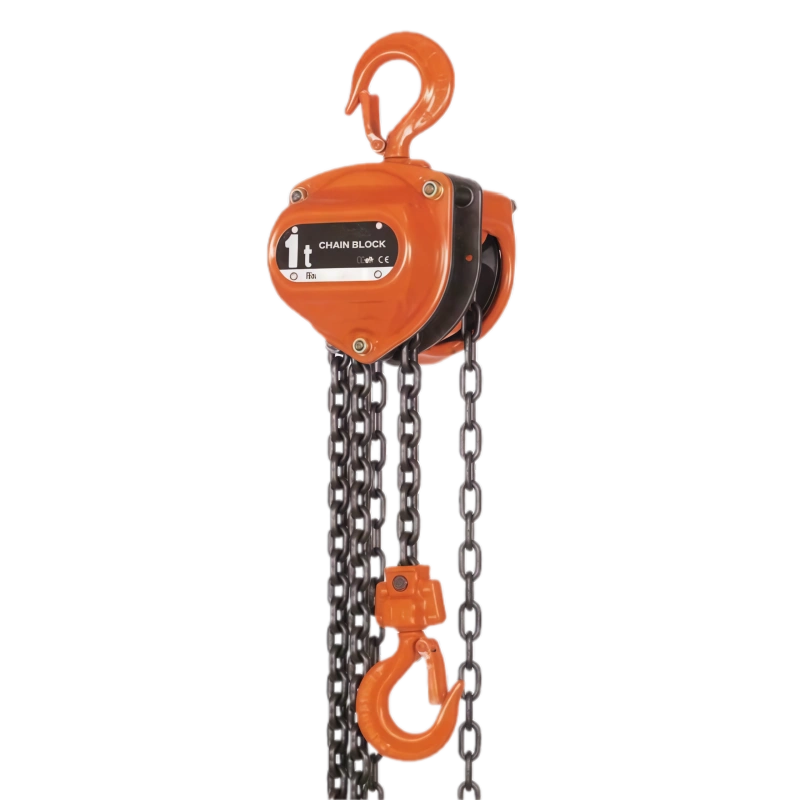
HSZ-KII HAND CHAIN HOIST CONFIGURATION OVERVIEW
A hand chain hoist converts the operator’s pull on the hand chain into controlled movement of the load chain. The HSZ-KII should be configured for the actual suspension point, load path, and required hook travel rather than being selected by rated load alone.
- Rated load: Select a rating that is at least equal to the maximum verified suspended load, and never exceed the marked rated load or working load limit stated for the hoist.
- Rated lift: State the required hook travel and confirm any non-standard lift before ordering.
- Headroom: Check the available distance between the suspension point and the required upper position of the load hook.
- Suspension: Confirm whether the hoist will be suspended from a fixed rated point or an approved trolley arrangement.
- Operating environment: Identify outdoor exposure, dust, moisture, temperature limits, or corrosive conditions that may require a different configuration or written approval.
The HSZ-KII is part of our manual lifting equipment range. For a broader comparison of available options, review our chain block range or the full manual hoist selection guide.
APPROVED HSZ-KII SPECIFICATIONS
Use the approved technical table below to compare rated load, standard lift, test-load terminology where applicable, minimum headroom or closed hook-to-hook distance, hand effort at rated load, number of load-chain falls, load-chain diameter, dimensions, and unit weight.
| Model | K1/12 | K1/1 | K1/1/2 | K1/2 | K1/3 | K1/5 | K1/10 |
| Capacity (t) | 0.5 | 1 | 1.5 | 2 | 3 | 5 | 10 |
| Standard lift (m) | 2.5 | 2.5 | 2.5 | 3 | 3 | 3 | 3.5 |
| Test load (t) | 0.75 | 1.5 | 2.25 | 3 | 4.5 | 7.5 | 15 |
| Min.distance between hooks (mm) | 285 | 315 | 340 | 380 | 475 | 600 | 700 |
| Chainpull to lift full load (n) | 25 | 33 | 34 | 34 | 35 | 39 | 41 |
| No. of load chain fall lines | 1 | 1 | 1 | 1 | 2 | 2 | 4 |
| Diameter of load chain (mm) | 6.3 | 6.3 | 7.1 | 8 | 7.1 | 9 | 9 |
| Net weight (kg) | 8.4 | 11 | 13.5 | 21 | 22 | 40 | 77 |
| Gross Weight (kg) | 9.4 | 12 | 14.5 | 22 | 23 | 41.5 | 85 |
| Packing measurement L×W×H (cm) | 26×16×20 | 26×16×20 | 27×18×24 | 27×18×24 | 28×19×26 | 39×22×30 | 48×46×26 |
HOW TO SELECT THE CORRECT HSZ-KII HAND CHAIN HOIST?
1. Confirm the Maximum Suspended Load
Use the heaviest load that will actually be lifted, including below-the-hook lifting devices and attachments. Do not select from a typical load if occasional lifts are heavier.
2. Measure Required Lift and Headroom
Measure the required vertical hook travel and the available headroom. A higher-capacity unit may use additional load-chain falls and may have a larger closed hook-to-hook dimension, so rated load alone does not determine whether the hoist will fit the application.
3. Check the Suspension Point
The supporting structure, beam clamp, trolley, or other suspension device must be rated and suitable for the intended load path. If travel along a beam is required, compare compatible manual trolley options and confirm the beam dimensions and connection method before ordering.
4. Define the Working Environment
Provide details of dust, water exposure, corrosive substances, temperature, restricted access, and lifting frequency. Standard construction should not be assumed suitable for a special environment without written confirmation.
5. Confirm Documentation Requirements
List any inspection records, test certificates, markings, manuals, language requirements, packaging requirements, or traceability documents needed for the destination and application.
TYPICAL APPLICATIONS
After the rated load, suspension point, required lift, headroom, and operating environment have been verified, an HSZ-KII hand chain hoist may be considered for controlled vertical lifting in workshops, maintenance areas, warehouses, construction support work, and machinery installation.
It is not a substitute for a lever hoist when the task primarily involves pulling, tensioning, or angled positioning. See lever hoist vs chain block for the selection differences.
INSPECTION AND OPERATING BOUNDARIES
Before use, verify that the hoist identification and rated-load marking are legible. Check the suspension, hooks, latches, load chain, and hand chain for visible damage, distortion, corrosion, wear, incorrect reeving, or abnormal movement. Confirm that the load chain is correctly seated, untwisted, and free to travel. Remove the hoist from service if damage, malfunction, or unreadable identification is found.
Use the hoist only for controlled vertical lifting within its marked rating and approved operating conditions. Do not side-load the hooks, pull a load diagonally, use the load chain as a sling, lift people, or move a suspended load over people. Follow the supplied model manual, the site lifting plan, and the inspection requirements that apply to the destination market and workplace.
For a fuller pre-use and periodic inspection structure, use the chain block inspection checklist. Maintenance and repair must follow approved instructions and qualified-person boundaries; see our guides to chain block maintenance and chain block repair.
STORAGE BETWEEN USES
After use, fully unload the hoist and store it in a clean, dry location where the body, hooks, hand chain, and load chain are protected from impact, contamination, corrosion, and tangling.
Follow our specified cleaning, lubrication, and preservation procedures before storage, and complete the required inspection and functional checks before returning the hoist to service. For a step-by-step process covering storage preparation, chain organization, storage conditions, and return-to-service checks, see the chain block storage guide.
INFORMATION TO INCLUDE IN YOUR ENQUIRY
To receive an accurate quotation, provide:
- HSZ-KII model, if already selected, or required rated load
- Required lift, including any non-standard lift requirements
- Available headroom
- Suspension method and beam details, if a trolley is required
- Operating environment and expected lifting frequency
- Quantity
- Required test, inspection, marking, and documentation
- Destination and packaging requirements
If the model has not yet been selected, send the load, lift, headroom, suspension, and application details. Our team can compare the requirements with the approved HSZ-KII configurations.
FAQ
What Is an HSZ-KII Hand Chain Hoist?
It is a manually operated chain block intended for controlled vertical lifting. The operator pulls the hand chain to drive the internal mechanism, which moves the load chain and raises or lowers the load hook.
Which HSZ-KII Rated Load Do I Need?
Select a rated load that is at least equal to the maximum verified suspended load, including below-the-hook lifting devices and attachments. Also confirm the required lift, headroom, number of load-chain falls, hand effort, suspension arrangement, and capacity of the supporting structure.
Can a Hand Chain Hoist Be Used for Horizontal Pulling?
Hand chain hoists are designed primarily for controlled vertical lifting and are not intended for horizontal pulling. For pulling, tensioning, or angled positioning, a lever hoist is generally the more suitable equipment type. Always confirm that the selected model is approved for the intended application and follow its operating instructions.
Can the Lift Be Customized?
State the required hook travel in the enquiry. Any non-standard lift must be confirmed against the approved model configuration, headroom, load-chain reeving, chain-management requirements where applicable, unit weight, and packaging.
How Often Should the Hoist Be Inspected?
Apply the inspection frequency required by the exact model manual, service conditions, site procedures, and applicable rules. Pre-use checks and periodic inspections serve different purposes, and severe or frequent service may require shorter intervals. Remove the hoist from service when damage, abnormal operation, or an unresolved inspection finding is identified.