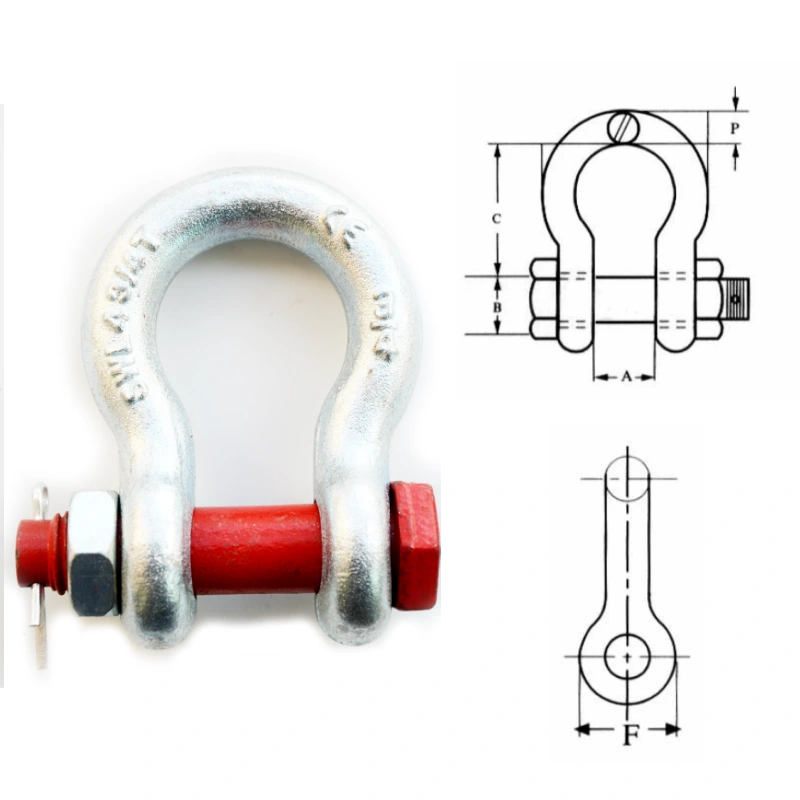
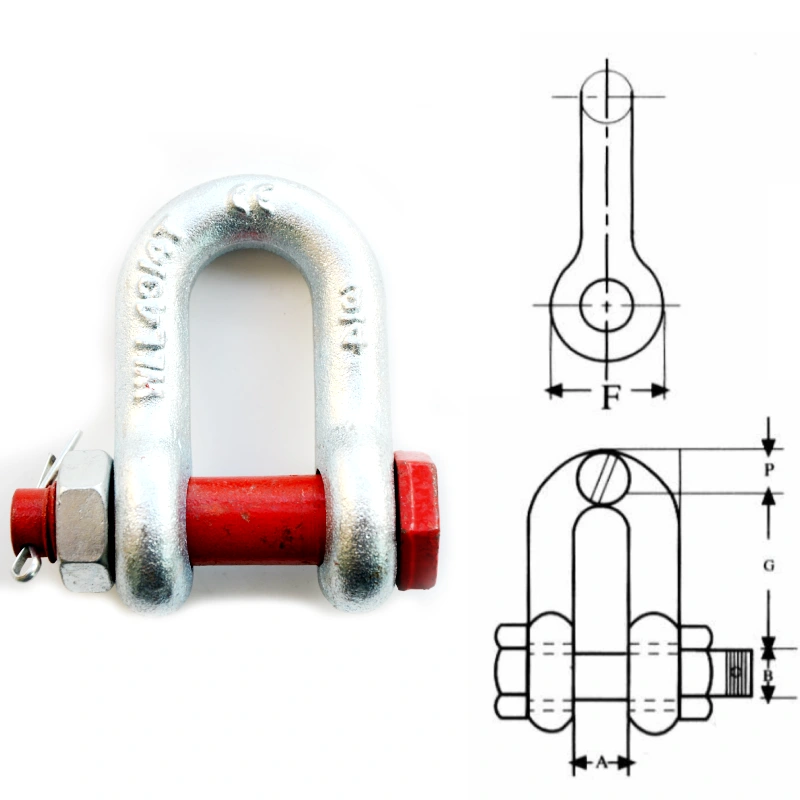
Powerful Machinery supplies forged lifting and rigging shackles for industrial lifting, material handling, construction, marine, and general rigging applications. New to shackles? Start with what a shackle is and how its body and pin work before comparing product patterns.
Available configurations include bow (anchor) and Dee (chain) body styles with screw-pin and safety-bolt closures, including Grade S AS 2741 patterns and U.S.-type G-209, G-210, G-2130, and G-2150 patterns.
Working load limit (WLL), dimensions, material, finish, markings, and applicable standards vary by model, so select the required shackle based on the exact product specification and intended application rather than body shape or nominal size alone. For related shackles, hooks, links, turnbuckles, and other components, see our rigging hardware range.
Request a shackle quote: Send the required WLL, body style, pin or closure type, critical connection dimensions, applicable standard or shackle pattern, material and finish, quantity, service environment, marking and documentation requirements, delivery destination, and required delivery date.
Powerful Machinery supplies multiple shackle types for different connection geometries, pin-retention requirements, and rigging applications. Compare the required WLL, body style, pin configuration, connection dimensions, and service conditions when selecting the appropriate model.
Available shackle types include Grade S Bow Shackles and Grade S Dee Shackles in AS 2741 patterns, U.S.-type G-209 screw-pin anchor shackles, G-210 screw-pin chain/Dee shackles, G-2130 safety-bolt bow/anchor shackles, G-2150 safety-bolt Dee shackles, and European-type large bow and Dee shackles. Confirm the current size range, WLL, finish, markings, and documentation requirements for the specific model when requesting a quotation.
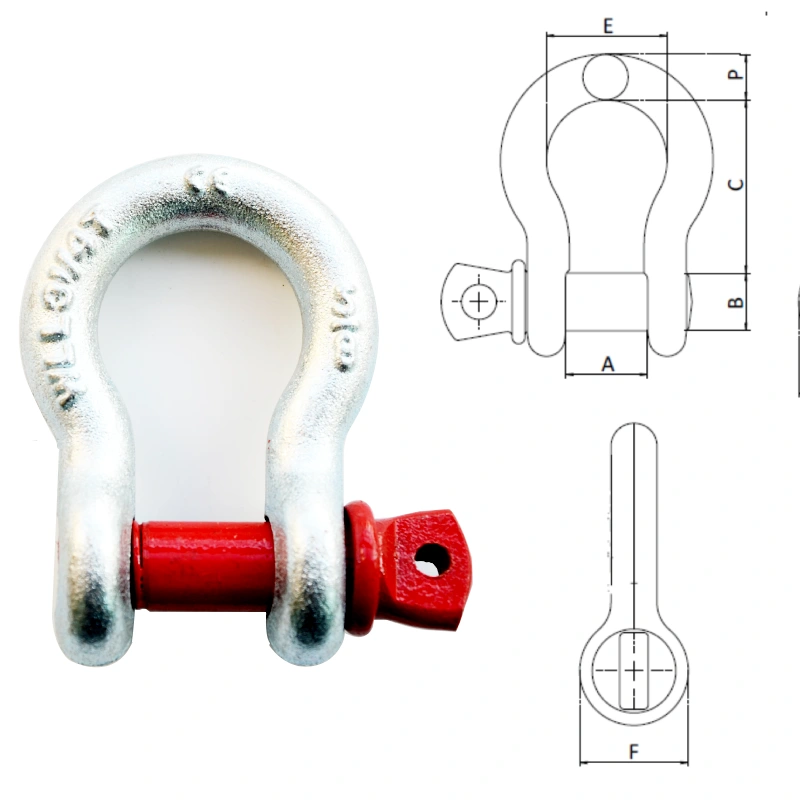
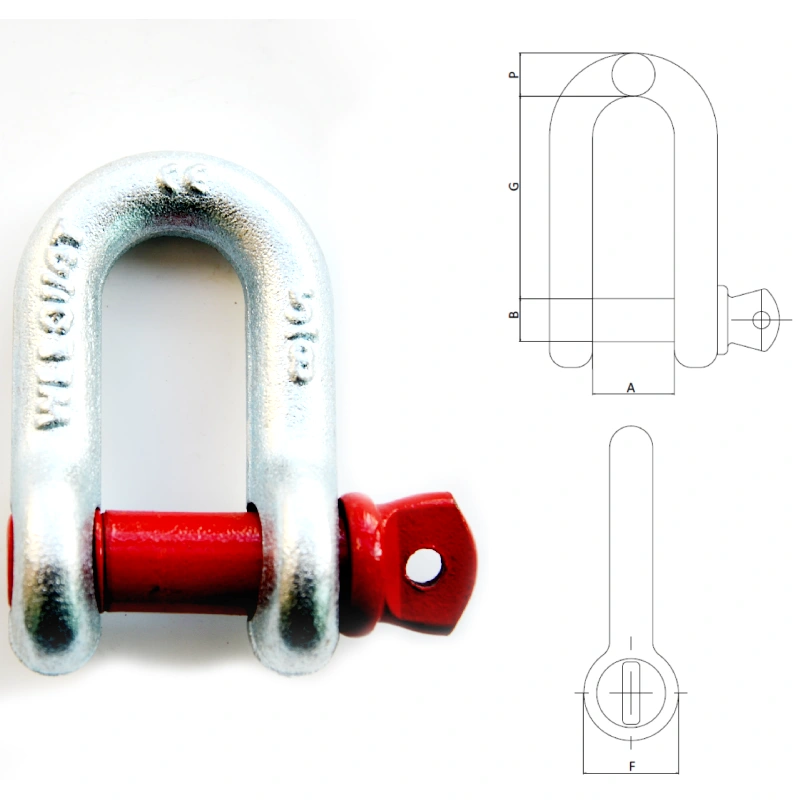
Bow shackles have a wider, rounded body and provide more space at the crown for certain sling eyes, links, or fittings. Dee shackles have a narrower profile and are generally used where the connection and load remain aligned with the shackle body.
Selection should be based on the exact model’s WLL, dimensions, connection geometry, permitted load direction, and manufacturer instructions rather than body shape alone. For a more detailed comparison, see our bow shackle vs Dee shackle comparison.
For connections to web or round slings, provide the sling-eye dimensions and the required bearing area so the shackle geometry can be checked against the sling manufacturer’s instructions. A standard bow shackle should not be described as a wide-body shackle unless that specific model is documented and rated for the application.
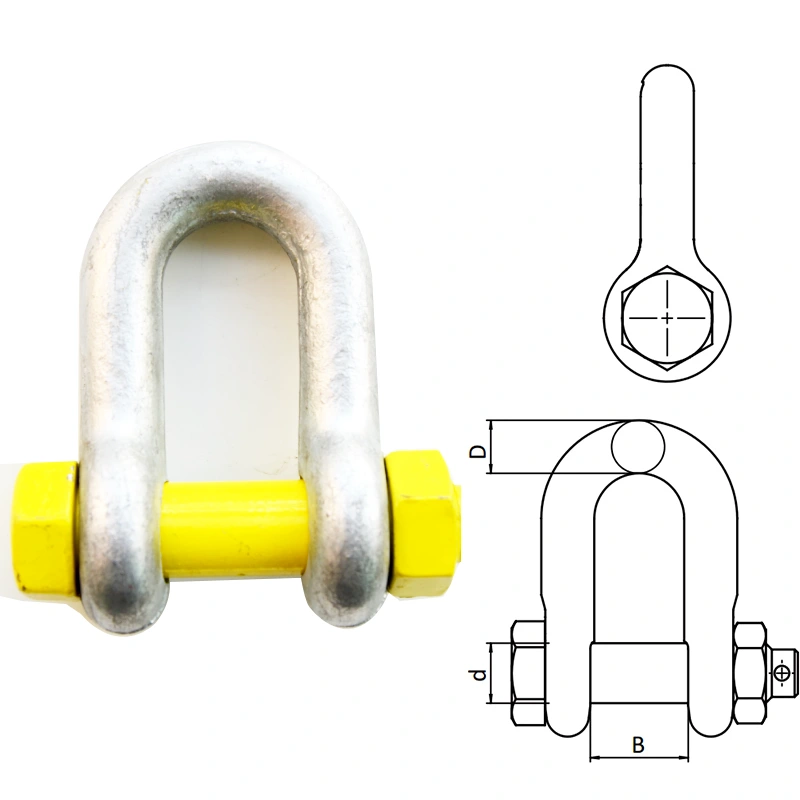
Screw-pin shackles provide a removable threaded-pin connection and are commonly used where rigging connections require convenient assembly and disassembly. Safety-bolt shackles use a bolt, nut, and cotter-pin arrangement for positive pin retention and are often specified where additional pin security is required. Select the closure type according to the exact shackle model, WLL, connection geometry, expected movement or vibration, service conditions, applicable requirements, and manufacturer instructions.
Send your required WLL, connection dimensions, body and pin type, applicable standard or shackle pattern, material and finish, quantity, and documentation requirements. Powerful Machinery will review your specifications and confirm suitable product options for quotation.
The following ranges provide representative examples from Powerful Machinery’s current shackle product data. Available sizes, working load limits (WLLs), dimensions, finishes, markings, and documentation vary by model. Confirm the exact product specification and current availability when requesting a quotation, and verify the applicable product data before use.
| Shackle type / pattern | Example size range | Example WLL range |
|---|---|---|
| Grade S Dee Shackle — AS 2741 pattern | 6–51 mm | 0.5–35 t |
| Grade S Bow Shackle — AS 2741 pattern | 6–63 mm | 0.5–55 t |
| U.S.-type G-209 screw-pin anchor shackle | 3/16–3 in | 1/3–85 t |
| U.S.-type G-210 screw-pin chain/Dee shackle | 1/4–3 in | 1/2–85 t |
| U.S.-type G-2130 safety-bolt bow/anchor shackle | 1/2–4 in | 2–150 t |
| U.S.-type G-2150 safety-bolt Dee shackle | 1/2–4 in | 2–150 t |
| European-type large bow and Dee shackles | 5–50 mm | 80–8,000 kg |
Representative product ranges only. Confirm the current size, dimensions, WLL, finish, markings, documentation, and availability for the exact model when requesting a quotation.
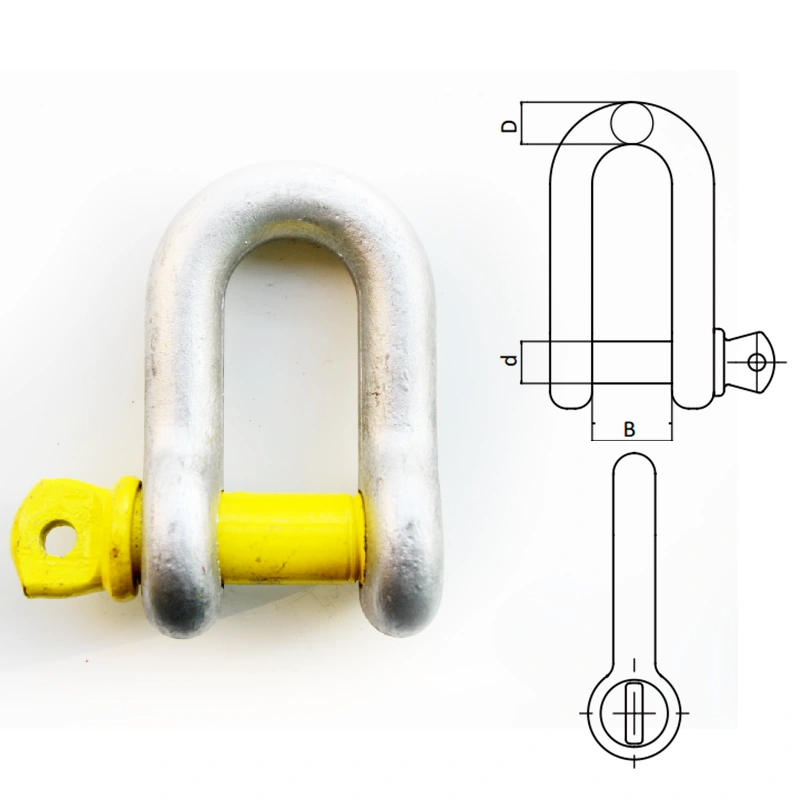
Shackle selection should be based on the required WLL, connection geometry, and service conditions rather than nominal size alone. Confirm the available clearance for the shackle body and pin, sling-eye or lifting-point dimensions, intended load direction, required pin-retention type, applicable standard or specified shackle pattern, material and finish, quantity, and documentation requirements. If you need to confirm physical dimensions before preparing an RFQ, see our guide to how shackles are measured.
For repeat or bulk orders, include the mating-part dimensions and any fit tolerances that must remain consistent across shipments.
Shackle material and finish should be selected according to the required WLL, applicable product specification, corrosion exposure, and service environment. Forged-steel shackles are available with galvanized and other protective finishes, while stainless steel provides a separate material option for applications where corrosion resistance is an important requirement.
Confirm the material grade, finish, product rating, and environmental requirements for the exact model being specified. For more information, see our shackle materials guide or browse our stainless steel shackles.
ASME B30.26 covers detachable rigging hardware used in load-handling applications, including shackles. Reference to this standard does not mean that every shackle automatically conforms to all applicable ASME B30.26 requirements; conformity should be verified for the specific product and application.
For U.S. construction applications, OSHA 29 CFR 1926.251 requires rigging equipment to have permanently affixed and legible manufacturer-prescribed identification markings indicating the recommended safe working load, and prohibits use above that rated capacity. The standard also specifically requires shackles to remain within the working load limits indicated by the manufacturer.
Product markings, proof-testing requirements, certificates, traceability, and other documentation should be confirmed for the exact shackle, applicable standard, and purchase specification. Powerful Machinery identifies the Grade S bow and Dee ranges shown above as AS 2741 patterns; this designation should not be assumed to apply to other shackle models unless specifically stated in the relevant product data.
For project-specific or OEM orders, provide any required drawings, custom dimensions, markings, finishes, packaging, testing, inspection, or documentation requirements with the RFQ. Powerful Machinery can review these requirements against the exact shackle specification and order scope. For custom drawings, private-label programs, or broader OEM sourcing, see our custom OEM rigging hardware capabilities.
Use only shackles with legible identification and a working load limit (WLL) suitable for the intended application. Do not exceed the applicable WLL, and verify any requirements for side loading, angular loading, pin retention, inspection, and removal from service for the specific shackle design. Follow the manufacturer’s instructions, applicable standards, and relevant workplace or site procedures during use and inspection. For a detailed inspection process, see our shackle inspection checklist. For inspection guidance covering shackles together with other load-rated components, see our general rigging hardware inspection guide.
Start with the required WLL and connection geometry, then verify the pin diameter, jaw opening, inside dimensions, and available clearance for the mating components. Nominal shackle size alone is not sufficient. Use the current product data and dimensional drawing for the exact model being specified.
Testing, certification, traceability, and documentation requirements vary by shackle model, applicable standard, destination, and order specification. Include any required test reports, certificates, traceability records, or third-party inspection requirements in the RFQ so availability and scope can be confirmed for the exact product.
Side loading should only be considered where it is permitted for the specific shackle design. Any allowable load-angle limits or WLL reductions depend on the exact model and manufacturer instructions. If the connection cannot maintain the specified load direction, provide the connection geometry with the RFQ for review.
Send the required WLL, body style, pin type, connection dimensions, applicable standard or specified shackle pattern, material and finish, service environment, quantity, marking and documentation requirements, packaging, destination, and required delivery date.
We can review custom markings, packaging, private-label requirements, and other OEM specifications based on the shackle model, order quantity, and project requirements. Include these requirements in the RFQ for confirmation.
Material and finish options vary by shackle model. Where corrosion resistance is required, specify the service environment, material requirement, finish, and applicable standard so that the appropriate product options can be reviewed.
After downloading the product catalogue, our dedicated technical experts will provide you with one-on-one service.