A chain quote should start with the intended application. Let us know whether the chain will be used for lifting, lashing, towing, anchoring, guiding, identification, or barrier use. Please also provide the required grade or standard, nominal size, working load limit (WLL) or minimum breaking load, finish, length, quantity, destination market, and any documentation requirements. We will review the specification and confirm any additional details needed before preparing the quotation.
Choose the Chain by Application
Lifting Chains
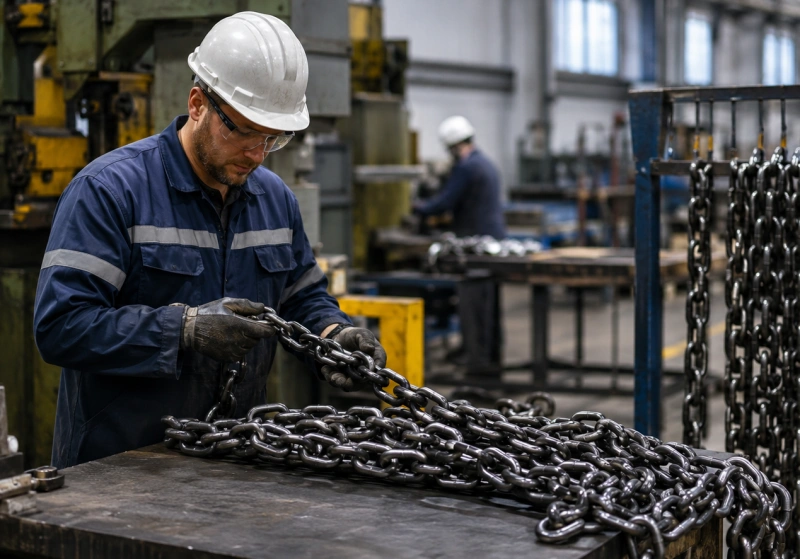
For overhead lifting, use an alloy lifting chain that meets the required standard and application. Grade 80 and Grade 100 are common options, but chain grade alone does not determine the capacity of a finished sling. Chain size, number of legs, hitch type, sling angle, fittings, operating temperature, and the lowest-rated component all affect the final working load limit.
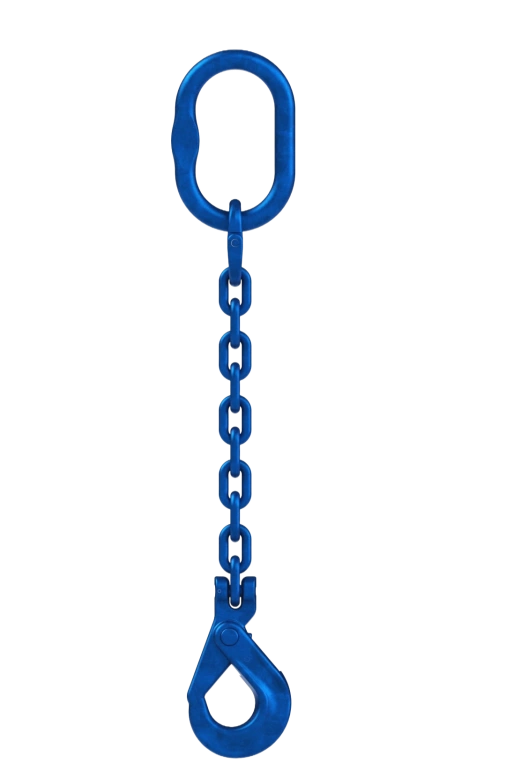
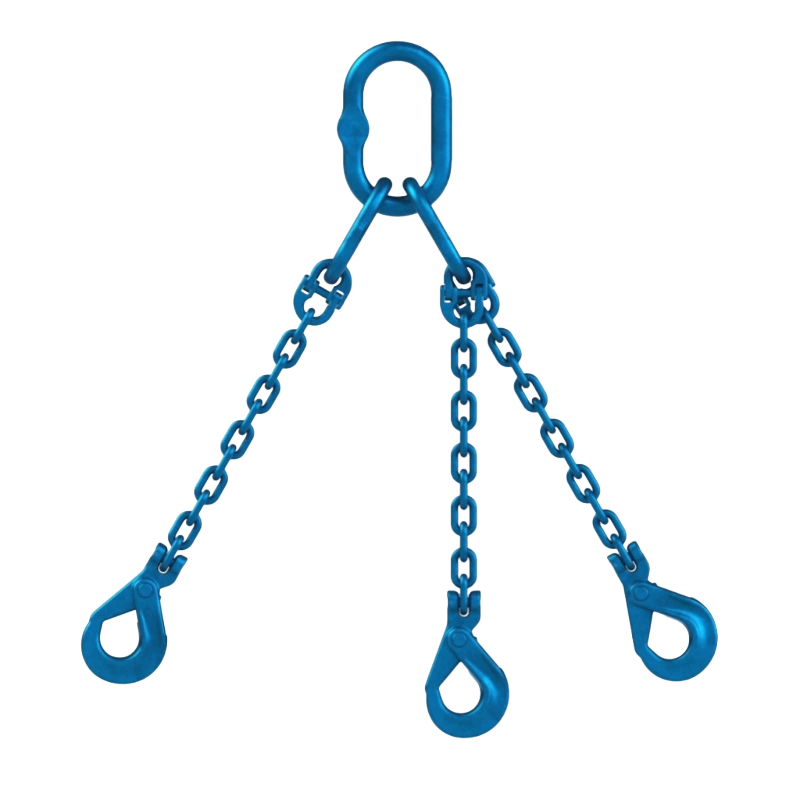
If you need a complete assembly rather than bulk chain, review our chain slings and provide the load, sling geometry, required reach, and end-fitting details.
Lashing and Transport Chains
Transport and lashing chains are intended for cargo securement, not overhead lifting. Chain grade, size, end fittings, and binder selection should match the applicable cargo-control requirements.
For a complete securement system, check the working load limit of the chain against the rating of the load binder and all connecting components. The system rating should not exceed that of its lowest-rated component.
When specifying a chain, confirm the exact dimensional standard, material, finish, tolerances, and required performance. A dimensional standard by itself does not mean the chain is suitable or approved for lifting.
Chain Family
Typical Use
Grade 80 / Grade 100 alloy lifting chain
Overhead lifting systems
Grade 70 transport / lashing chain
Cargo securement
DIN / U.S. / UK / Australian / Korean link chain
General industrial use and market-specific dimensional requirements
Stainless steel link chain
Corrosive, washdown, or hygiene-sensitive environments, subject to the selected grade and rating
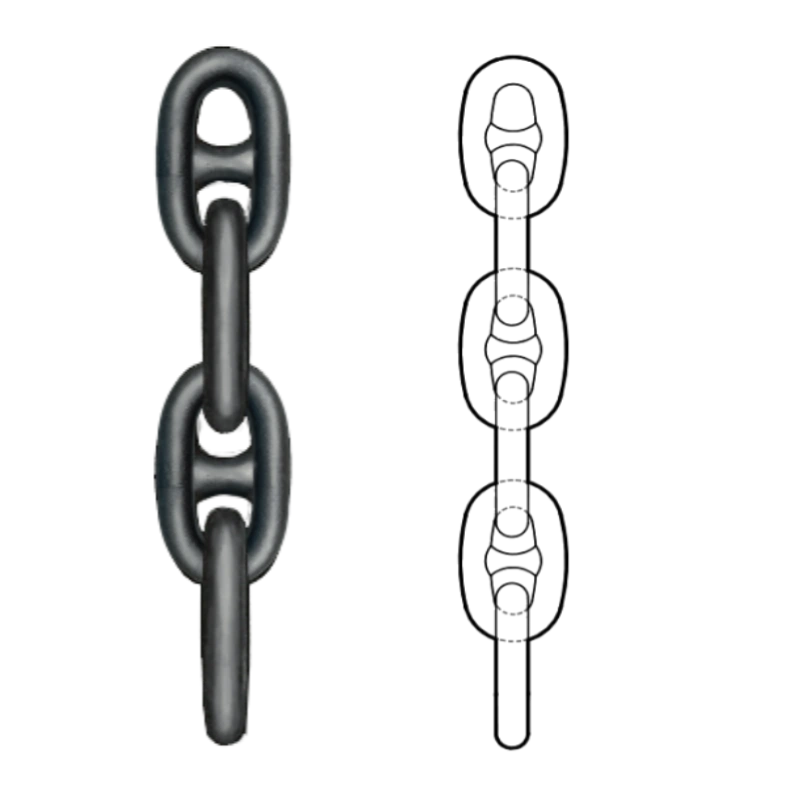
Anchor chain
Marine anchoring and mooring applications
Weldless chain
Light-duty and general utility applications, subject to product rating
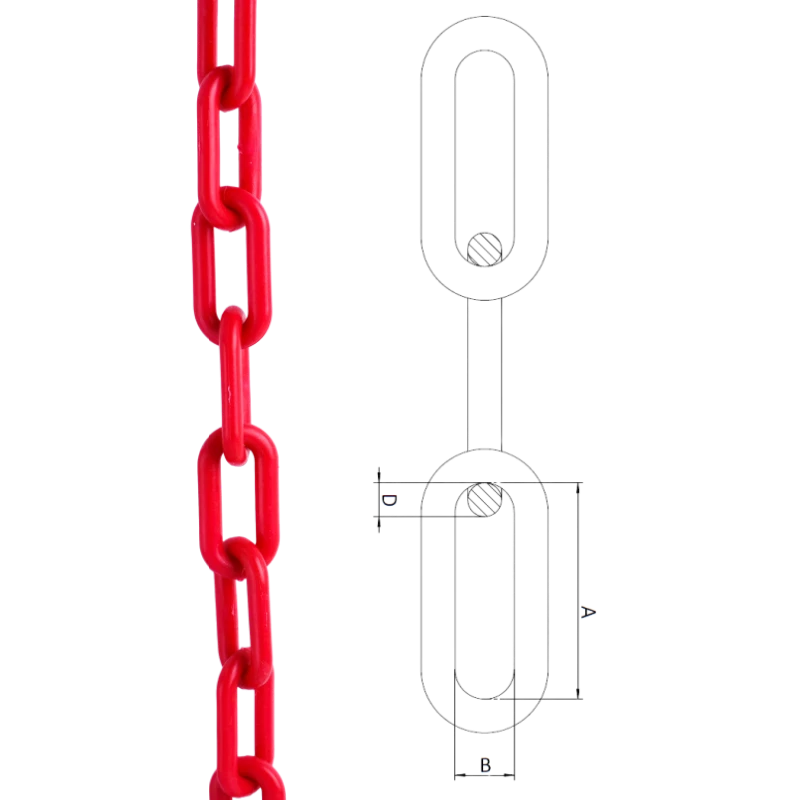
Plastic barrier chain
Visual barriers, access control, and crowd guidance; not for lifting
Define the job. State whether the chain will lift, secure cargo, anchor, tow, guide, convey, or act as a barrier.
Name the governing requirement. Provide the exact standard, grade, customer specification, or approved drawing.
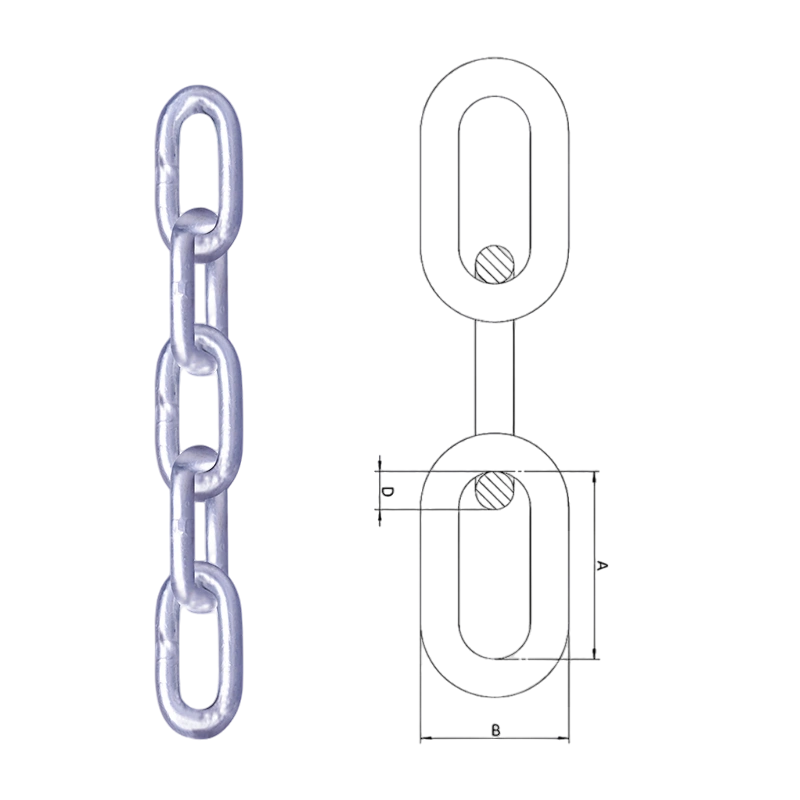
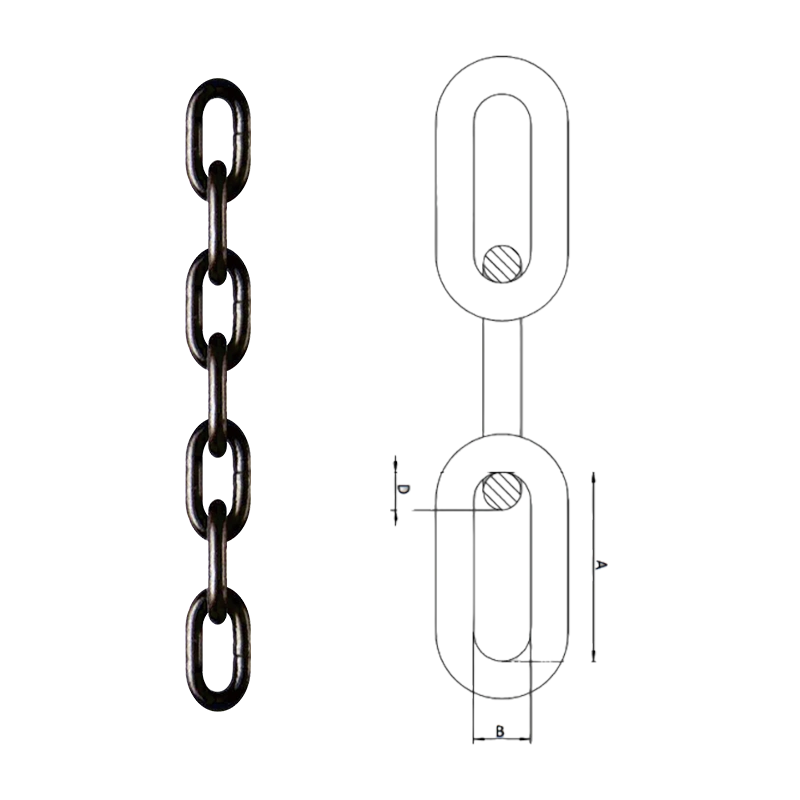
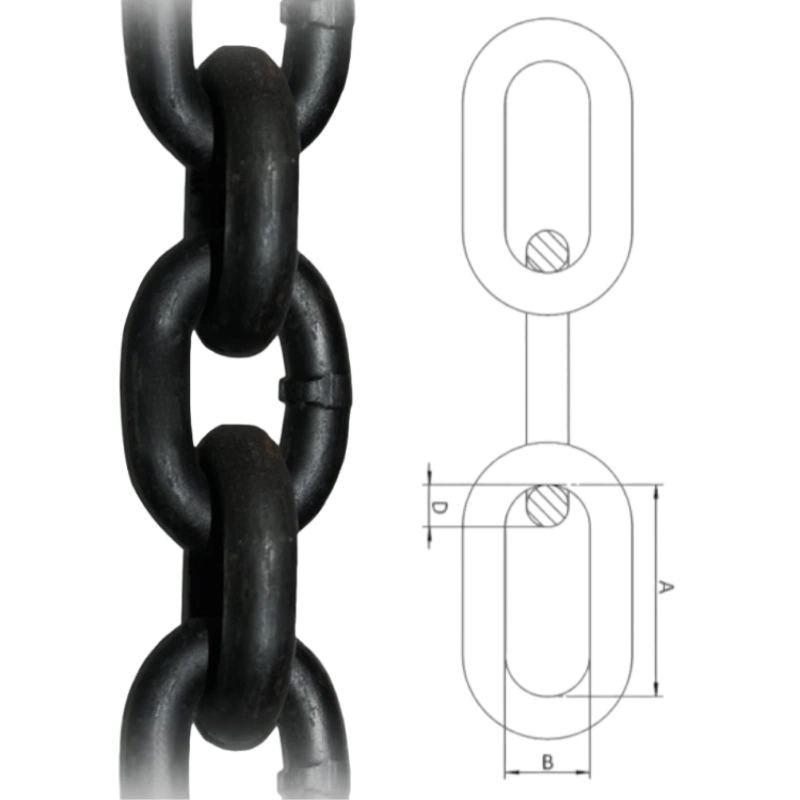
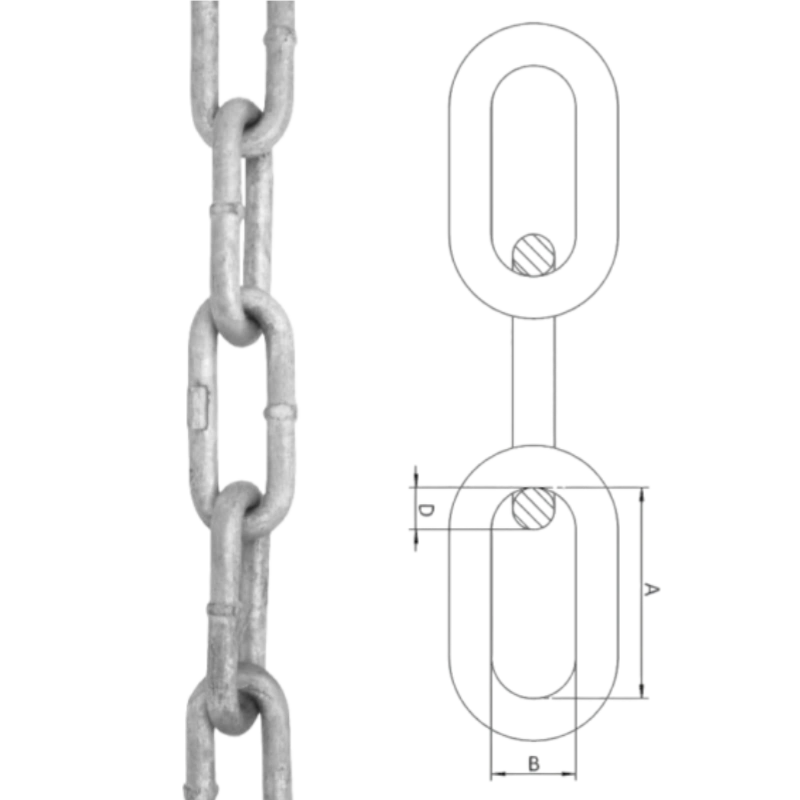
Give dimensions. Include nominal diameter, inside link length and width, total length, and tolerances where they control fit.
State the load requirement correctly. Use WLL for rated service or minimum breaking load where appropriate, and never substitute one for the other.
Describe the environment. Include temperature, saltwater, chemicals, outdoor exposure, abrasion, and required finish.
List end fittings and interfaces. Provide drawings or connection dimensions if hooks, links, binders, or shackles must match existing equipment.
Confirm quantity, packaging, marking, destination, and documents. Ask for the exact certificate or inspection record you need.
Important: A similar-looking chain can have a different intended use, material, heat treatment, rating method, and marking. Never select a chain by color or link size alone. Transport, proof-coil, decorative, weldless, stainless, anchor, and plastic chains must not be presented as overhead-lifting chain unless the exact product is expressly rated, marked, and documented for that purpose.
Why Choose Powerful Machinery as Your Chains Manufacturer?
Wide Chain Product Range
As a chain manufacturer, we offer lifting chains, lashing chains, welded link chains, stainless steel chains, and customized chain solutions for a variety of industrial applications.
Certified Manufacturing Standards
Our chains are produced under strict quality systems and can be supplied with relevant certifications, test reports, and inspection documents to support compliance, traceability, and customer confidence.
Flexible Custom Manufacturing
Our team supports custom chain specifications, including size, grade, surface finish, packaging, and OEM requirements, making it easier to match different project and market needs.
Reliable Supply Capability
With scalable manufacturing capacity and export experience, we provide dependable lead times, consistent product availability, and responsive support for bulk and repeat orders.
FAQ
What information is needed for a chain quotation?
Send the application, exact standard or grade, nominal size, required WLL or breaking-load value, finish, total length, end fittings, quantity, destination, and required documents. For lifting applications or unusual geometry, include a drawing and connection dimensions.
What is the difference between lifting chain and transport chain?
Lifting chain is part of a system rated for lifting loads under an applicable standard. Transport chain is intended to secure cargo. Grade 70 transport chain must not be used for overhead lifting. Always check the product marking, manufacturer data, and assembly rating.
Should I specify the working load limit or breaking load?
Specify the value required by the governing product standard and your application. WLL is the maximum load permitted under stated service conditions; breaking load is not a permissible working load. If you are unsure, provide the application and governing standard and ask the supplier to state the rating basis.
Can stainless steel chain be used for lifting?
Stainless steel describes the material family, not the lifting rating. Use it for overhead lifting only when the exact chain and matched components are rated, marked, and documented for that service under the applicable standard.
Request a Chain Quote
Send your application, chain type, standard or grade, nominal size, required WLL or breaking load, finish, length, quantity, destination, and document list. Attach a drawing when the chain must fit existing hooks, sprockets, binders, shackles, or other equipment.
Powerful Machinery will review the specification and return a product recommendation or a list of details that still need confirmation.